

Artisan Bread
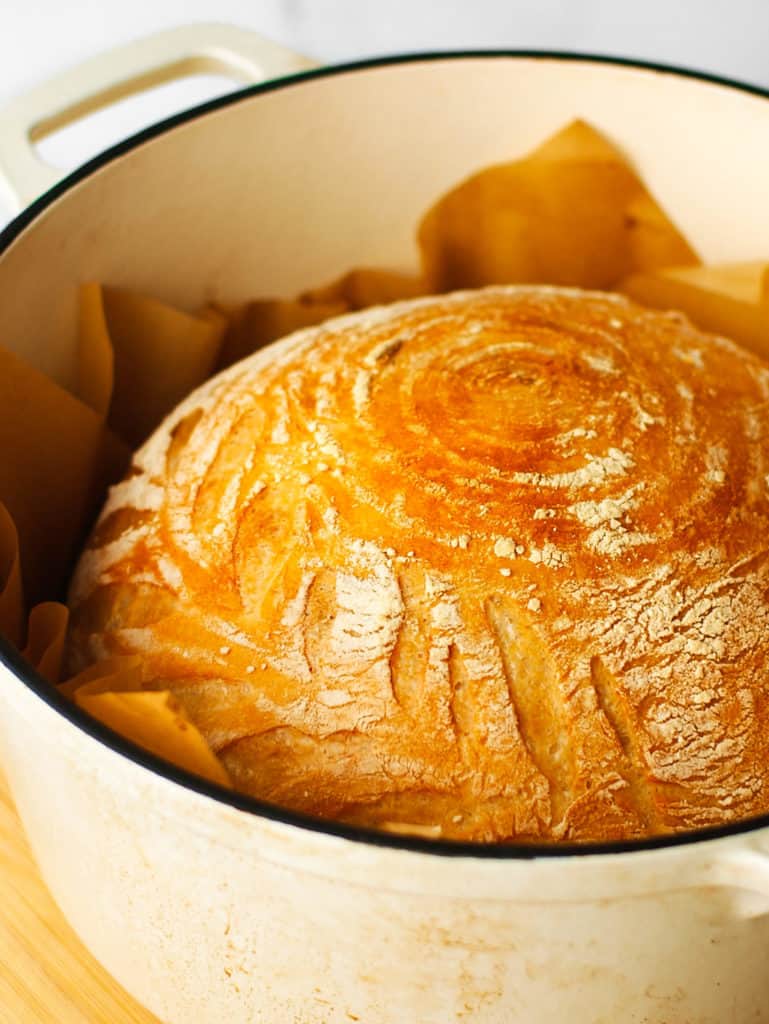
Artisan Bread is the perfect recipe for novice bakers who have never made bread before. This bread is delicious for sandwiches, swiping up spreads and dips or our personal favorite, butter and jam.
Ingredients
- 4 cups bread flour, fluffed, spooned and level
- 1 ¾ cups lukewarm water
- 2 teaspoons instant yeast see note below if using active dry yeast
- 2 teaspoons sea salt
- 2 teaspoon granulated sugar
- 2 teaspoons corn meal for coating the bottom of the loaf
Click between "US Customary" or "Metric" button above to switch between conversions. For precise results, it's recommended to weigh your dry ingredients using a digital scale in grams as measuring in cups can have uncertainties.
Instructions
Before you start
- I highly recommend using a kitchen digital scale for measuring flour and liquids as both are easily over-measured.
Make the dough
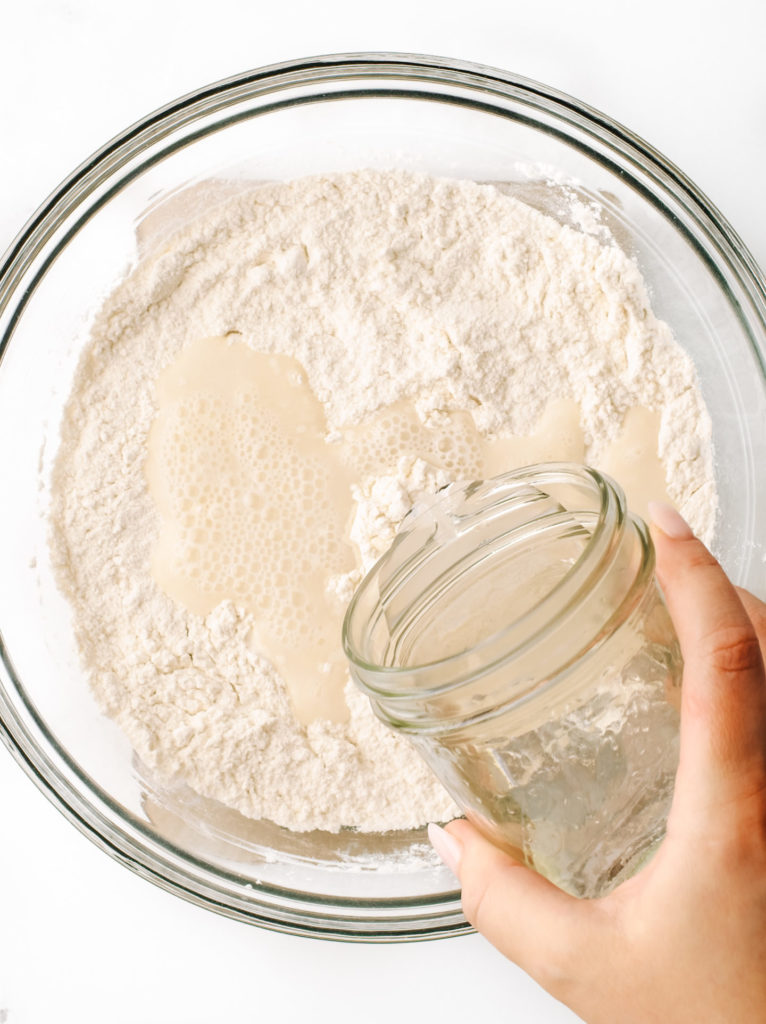
- In a large mixing bowl, combine flour, yeast, salt and sugar. See note below if using active dry yeast. Add warm water and use a Danish dough whisk or the neck of a wooden spoon to combine. As you mix, the dough will continue to hydrate and become wet and sticky. This may take 1-2 minutes and will be the hardest part of this recipe. Resist the urge to add extra water or flour. Note: Instant yeast can mixed directly with dry ingredients and active dry yeast must be dissolved in warm liquid first to be "activated" before use. Measure out water from the recipe, stir in the active yeast with a pinch of sugar. Let it sit for 5-10 minutes until its foamy or bubbly.4 cups bread flour, fluffed, spooned and level, 1 ¾ cups lukewarm water, 2 teaspoons instant yeast, 2 teaspoons sea salt, 2 teaspoon granulated sugar
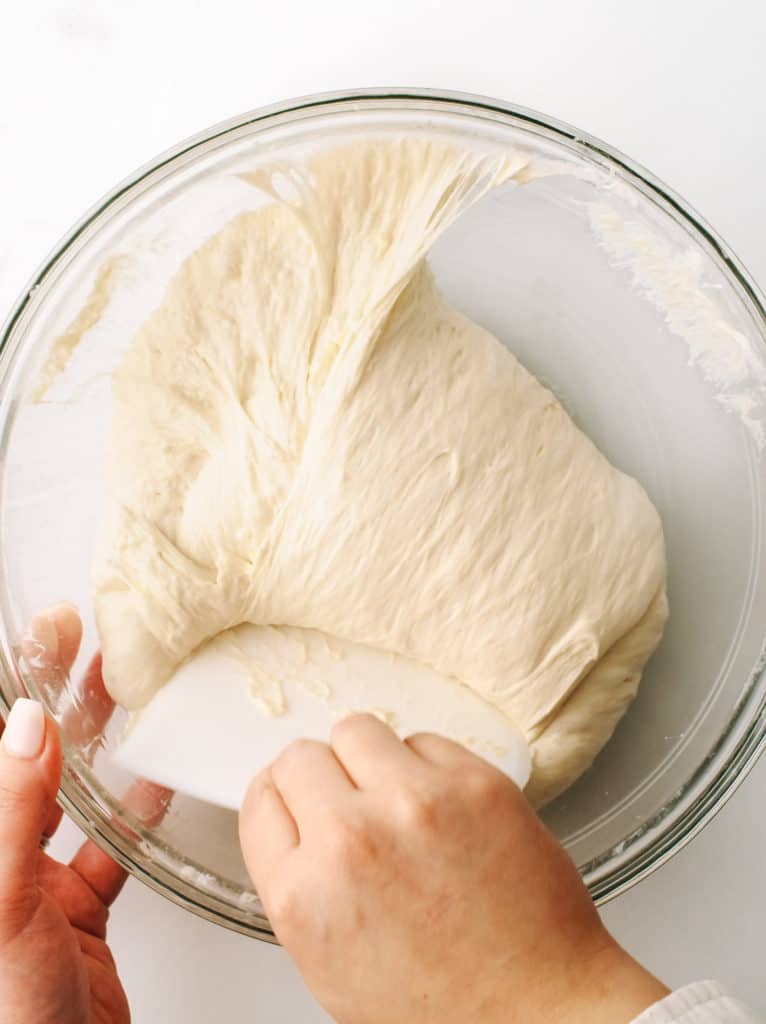
- Keep mixing until the dough completely sticks to the bottom of the bowl and no flour is visible. Then, use a dough scraper or very wet hands to clean the sides of the bowl with excess dough and cover with cling wrap and a tea towel. Leave on the counter in a warm spot for 30 minutes.
Stretch and fold
- After 30 minutes, perform a set of stretch and folds. To do this, wet your hands before proceeding as it will make it easier to handle the dough. Pull the dough up and over to the other side of the bowl. Work your way around the dough like you are looking at clock - you want to perform a fold at 12, 3, 6 and 9 o’clock. Form into a round shape. Scrape the sides of the bowl with a wet scraper or your hands.
First rise
- Cover again with plastic wrap and tea towel. Let it sit in a warm spot for at least 1½ hours or until doubled in size. If the dough needs more time, let it rise for up to 2 hours, until bubbly and wobbly.
Shape the dough
- While the oven is pre-heating, form the dough. First, use a dough scraper or very wet hands to release the dough from the sides of the bowl, pulling inwards to form a shaggy, round shape. Then, dust and rub the entire top surface of the dough with flour. Flip the dough onto the counter, flour side down.Note: I know the dough is sticky when shaping and folding. Please use flour only as needed.
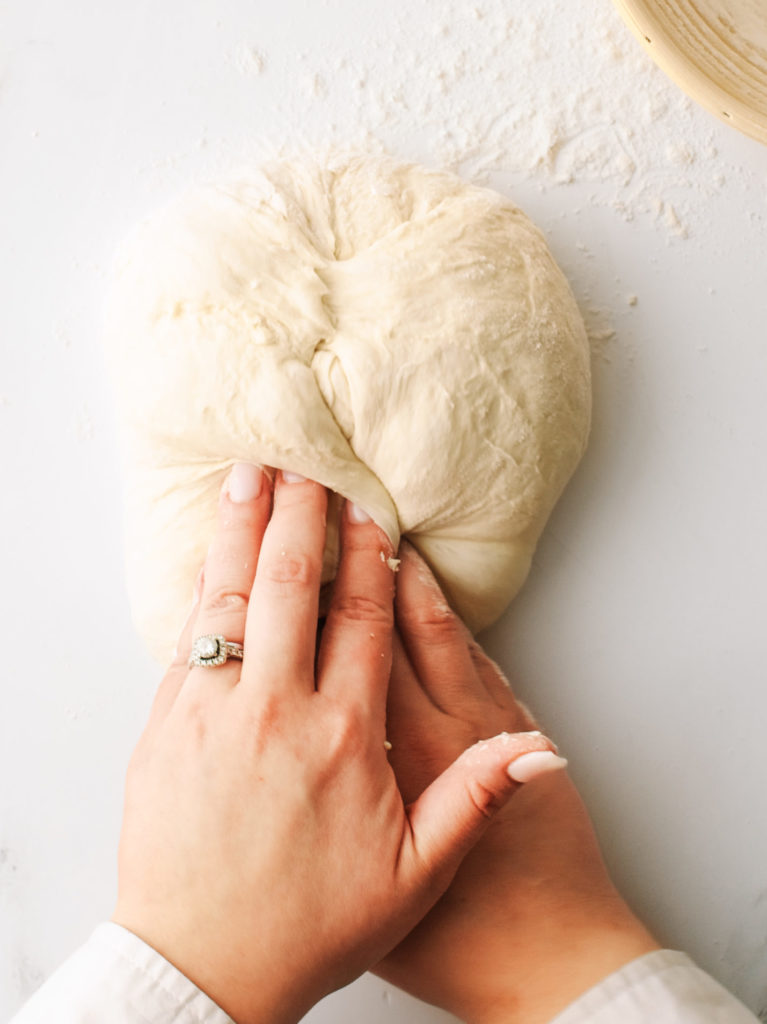
- Fold into third, pinch the seams and then flip seam side down.
- Use your hands to pull the dough towards you, using resistance from the clean working surface to shape into an even more round shape.
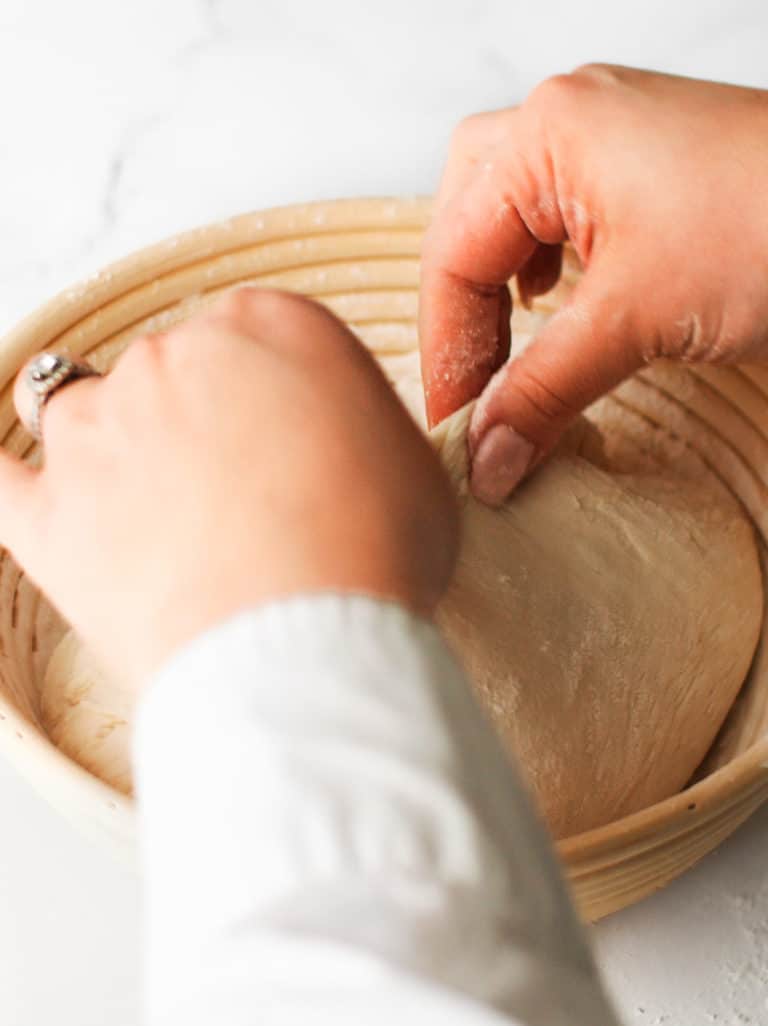
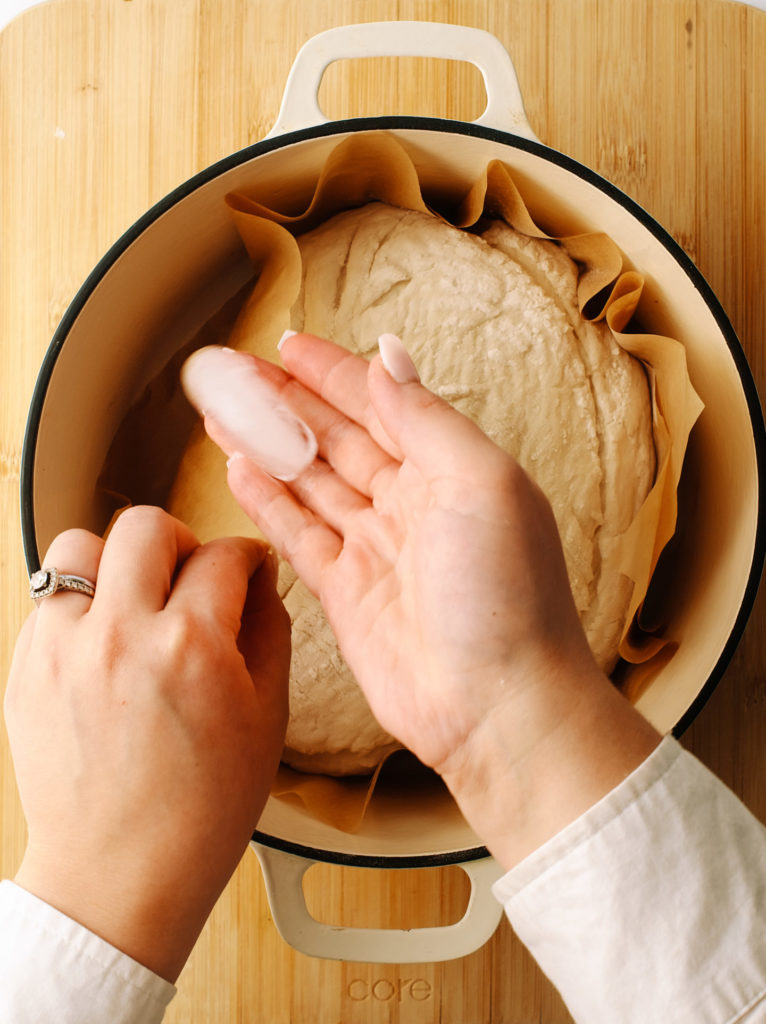
- Place the dough ball into a floured banneton, seam side up. Pinch the seams together and sprinkle corn meal over the top. This is my secret for minimizing burning on the bottom of the loaf.
Second rise
- Place in the refrigerator for up to 2 hours or as little as 30 minutes, while the Dutch oven is pre-heating.
Pre-heat the oven
- Once the dough is proofed, place the Dutch oven inside the oven with the lid on. Pre-heat at 450°F for at least 30 minutes prior to baking.
- Flip the dough onto the parchment paper with sprinkled corn meal. Dust the top with flour and use a bread lame create an “x” score on top.2 teaspoons corn meal
Bake
- Place the bread with the parchment paper into the pre-heated Dutch oven, pull the paper away from the side and add an ice cub in each corner. Bake for 30 minutes COVERED with the lid. Remove the lid. Bake for an additional 20-30 minutes UNCOVERED or until desired browning. Depending on the strength of your oven, bake time may vary.
- Remove from the Dutch oven and allow time to cool on a rack before slicing.
Video
Notes
- I highly recommend to weigh your dry and wet ingredients for best accuracy. Toggle between the US Customary and Metric tab in the ingredients section above for weight in grams. Shop my exact scale here. (affiliate link) If you don't have a scale, fluff the flour with a fork in its container, and then spoon it into the measuring cup before leveling off with a flat edge. Do not scoop directly into the flour bag. This will add way too much flour to the batter, making it dry!
- Instant yeast can mixed directly with dry ingredients and active dry yeast must be dissolved in warm liquid first to be "activated" or proofed before use. First, heat up your water until its lukewarm. Stir in the active yeast and a pinch of sugar. Let it sit for 5-10 minutes until its foamy or bubbly. For extended instructions, see Active Dry Yeast vs. Instant Dry Yeast blog post.
Nutrition
Calories: 190kcalCarbohydrates: 38gProtein: 7gFat: 1gSaturated Fat: 0.1gPolyunsaturated Fat: 0.4gMonounsaturated Fat: 0.2gSodium: 467mgPotassium: 74mgFiber: 2gSugar: 0.2gVitamin A: 1IUVitamin C: 0.01mgCalcium: 9mgIron: 1mg
The provided nutritional value above is an estimate per serving. 100% accuracy is not guarenteed. Please see Nutrition Information Disclaimer in our Privacy Policy.
Nutrition Information Disclaimer Have you tried this recipe?Please leave a comment/review below!




I love this recipe. I’ve tried several and this one is the best. Have you ever added inclusions to your bread? If so, how would you suggest I do this? Thanks and happy baking!
I would add it in the folding step! Do not add more than a cup of inclusions or it could weigh down the rise. 🙂 I hope this helps!
This bread was wonderful- nothing beats fresh warm bread.
Yay! We’re glad you enjoyed our recipe. 🙂
Absolutely, phenomenal.
Thanks Kellea!
This was absolutely amazing bread I’ve made several crusty breads in this was hands-down, the best !! Thank you !
Could I add sourdough starter and if so, how much?
Hi Roxann, you may substitute the yeast with 100g of sourdough starter. I recommend to increase the time between each stretch and fold to 30 minutes. After the stretches, proof the dough overnight in the fridge. Follow the rest of the recipe instructions. I hope this helps! 🙂
Delicious bread!! Our favorite artisan bread recipe, so easy.
Thanks Rue!
Best artisan bread recipe ever !!! I can never make just 1! These boys fight over the hot bread and butter!! Thank you! Easy to follow recipe
Thank you, Raluca! We’re so happy our recipe is a hit!
I have not made this recipe yet but I did try it when my aunt made it. Oh my word, absolutely delicious!! Reading the steps, this is the perfect recipe for anyone, and for someone wanting to try bread making.
Yay! Thanks so much, Brit! 🙂
Hi . Looking forward to making this bread . However is it ok if I use a high protein all purpose flour
Hi Seema, thank you for your question! Yes, you may substitute for high protein flour but keep in mind that the dough may rise more vigorously. Keep an eye on it to avoid over-proofing. Typically, high protein flour requires more water for absorption to maintain a soft crumb but because my artisan recipe is high hydration, this shouldn’t be an issue. I hope this helps!
love love love this recipe. I have loved every recipe you’ve put out as has my family and everyone that has tasted them. quick question for this recipe… i’ve tested cold rises but not loved any. is there a way you would do a refrigerated rise? and would you do this after stretch and folds, or after shaping?
Thank you so much! When using instant yeast, it’s not recommended for an overnight rise as it is easy to over-proof the dough. If you prefer to go the cold fermentation route (refrigerator rise), I recommend these steps: once the dough has risen in the initial rise, punch the dough to remove the air. Reshape it into a ball and cover tightly with plastic wrap. Place in the refrigerator overnight. The next morning, take the dough out and let it come to room temperature, about 1-2 hours. Then, shape the dough into your desired loaf shape/bread basket and let it rise for an additional hour until it has puffed up. Then, proceed with the baking directions. I hope this helps! 🙂
The crunchiness, the taste, and everything about this bread are special and delicious. You inspired me to start baking homemade bread, and it’s been more than a year since I began making bread. Thank you! I also found that kneading the dough is quite relaxing for me.
Hi Agneta! Wow, it’s an honor to be the one to inspire you to start making bread at home! 🙂
Whether you’re a professional baker or a first time baker, this recipe is perfect for you to get an easy bread that looks fresh out of the bakery. If you follow the directions as they are explained so well, you’ll get your bread looking just like the photo. Great recipe!!
Wow, thank you for such a gracious review! We love that you’re enjoy our recipe as much as we do! 🙂
Love this recipe! I make it a couple times a month and have used it so many times I have it memorized now. So simple and delicious every time!
Thank you for the lovely review, Andrea! We appreciate your love and support for our recipes. 🙂
First real success with bread. Have had a lot of failures but this bread turned out so well and is delicious.
Thank you for the lovely review, Helen! We’re so glad you joined the bread side 🙂
I am wondering what kind of Dutch oven you’re using to bake the bread.
I’m sure not any Dutch oven will do.
Thank you.
Hi Carmen, thank you for this question. It’s a good one! We have two Dutch ovens and both are 6 Quart size but a 5 Quart should work just as well. A size this big allows for proper expansion of the dough during baking while still providing enough room for the bread to rise and develop a nice crust. The dough should not be snuggly touching the sides or the lid. If it does, that could affect its shape and rise. I hope this helps. 🙂
Easiest, most delicious bread recipe! This was my first attempt ever at making bread, and it turned out beautifully on the first try! Patricia’s recipes are so beginner friendly, yet so gourmet tasting. You can’t go wrong with this one! A new household staple for our family and something I now make almost daily!
Hi Karina! Thank you so much for such a lovely review! We’re so happy to see bakers of every level trying our recipes. 🙂
Quite literally the easiest but yummiest bread recipe ever! I’ve made this bread way too many times and turns out perfectly every time!
Hi Adina, thank you so much! We love hearing the delicious, success stories.
This bread is perfection! My family loves it and it fits perfectly to my schedule.
That’s so wonderful! 🙂
Hi Patricia, I have a question. My dough is rising too much. It almost doesn’t fit in my banneton and in my 6qt Dutch oven. I’m using 6 gr of instant yeast for one bread. Is that right?
My crust is another thing that is not turning out as good as it was. I’m scoring and shaping in the same way. The top of the bread is turning just bright and not as yours.
Can you help me?
Thank you,
Flavia
Hi Flavia! I’m more than happy to help trouble shoot! I would say lets look at what factors contribute to the dough rising. One thing to note is the warmth of the room. Warmth not only activates the yeast but speeds up fermentation, resulting in a quicker rise. Next time, I would keep an eye on the dough in the first phase of rising and when it’s doubled in size, move on to the next, instead of waiting the full time. Did you weigh the flour? Did you use bread flour or substitute with all-purpose? Different flours have varying levels of gluten, which affects dough structure and how well it rises. I would start with my first suggestion and see how it goes. Regarding the crust, try adding a few more extra ice cubes in the Dutch oven before closing the lid and as long as you bake according to the suggested times, you should end up with golden brown crust. I hope you try again! 🙂
Do you have a conversion for grams of flour etc?
Hi Dan! Yes, in fact we prefer to use metric when making bread. You can find the metric conversion in the ingredients in the recipe card. There is a tab that changes between metric and US customary. Let me know if you have any trouble and happy baking!
This bread is absolutely amazing every time! A family favorite and so easy to make!!
Thank you, Alina! It never gets old hearing this! 🙂
Really good! I use White Rice Flour to dust the outside and bottom of bread. It does not burn. Very easy bread, the family loved it.
Hi Mary, thank you! I’m happy to hear you’re entire family is enjoying our bread recipe. 🙂
Your section “from novice to expert” was very helpful in my bread making success! I’m so thankful I found you! We’ve already made bread 3 times this week. I feel so accomplished to finally be able to make bread at home.
Thank you, Red! That’s what we’re here for 🙂
Seriously the easiest and yummiest bread recipe, so quick to make, most of it is just rise and cook time. My toddler loves helping me mix this and see the end result of such a warm and fluffy bread!!
Family friendly recipes are always a success in our book! 🙂
I never made bread before this one and it was so easy to follow the recipe and the bread turned out amazing. We ate the bread in a few days and I already made two more loaves. Now to learn how to make cool designs.
Thank you for trusting my recipe! Learning patterns is the fun part. I’ll try to share a few of my favorites on the blog. Come back soon. 🙂
Love, love this bread! This recipe is so easy and delicious!
Hi Manuela, thank you for your comment! I’m glad you’re enjoying our favorite artisan recipe. 🙂
Can you share what size Dutch oven you use for this recipe please?
This one is 5 quarts. 🙂
This bread is amazing! We eat the entire loaf before it even has a chance to cool down.
No judgement here. That is quite the compliment! Thank you, Alina. 🙂