Soft Dinner Rolls
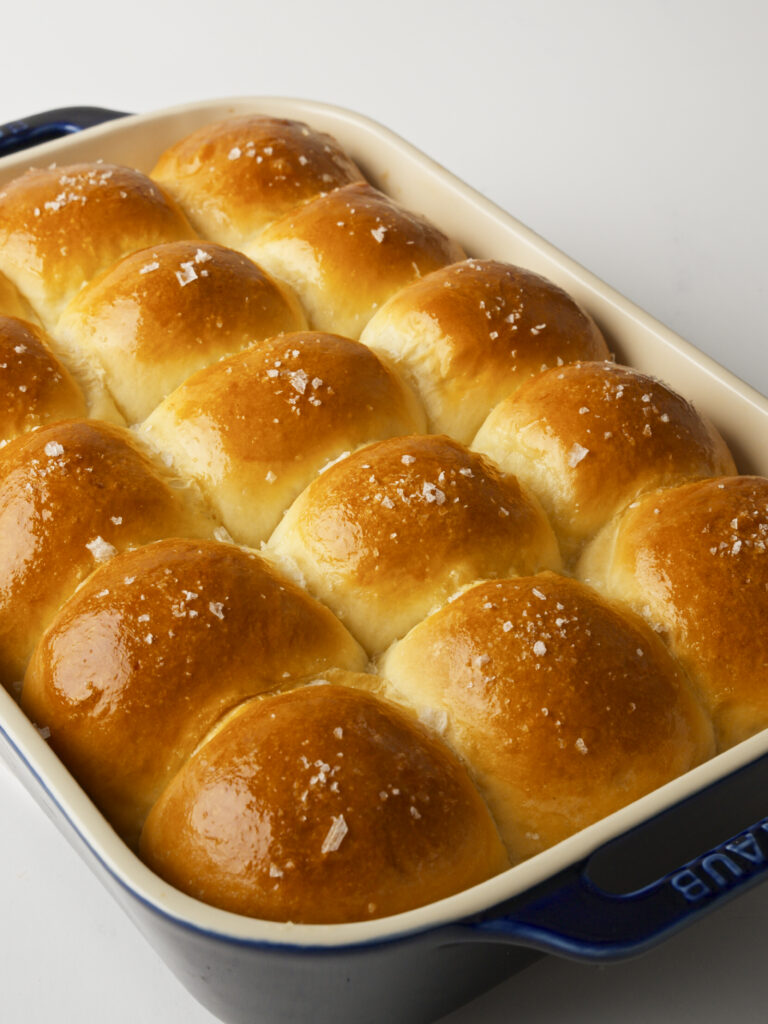
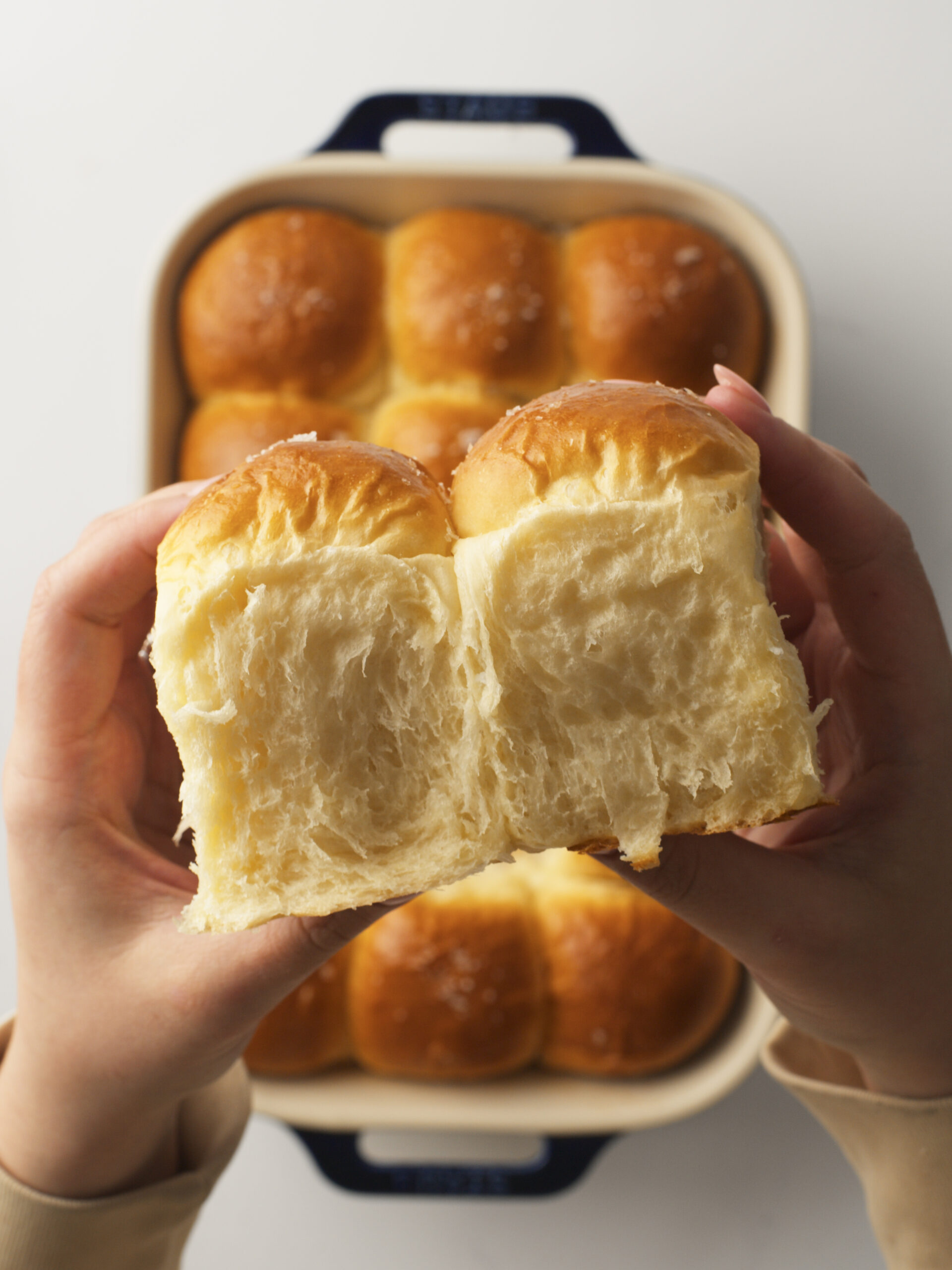
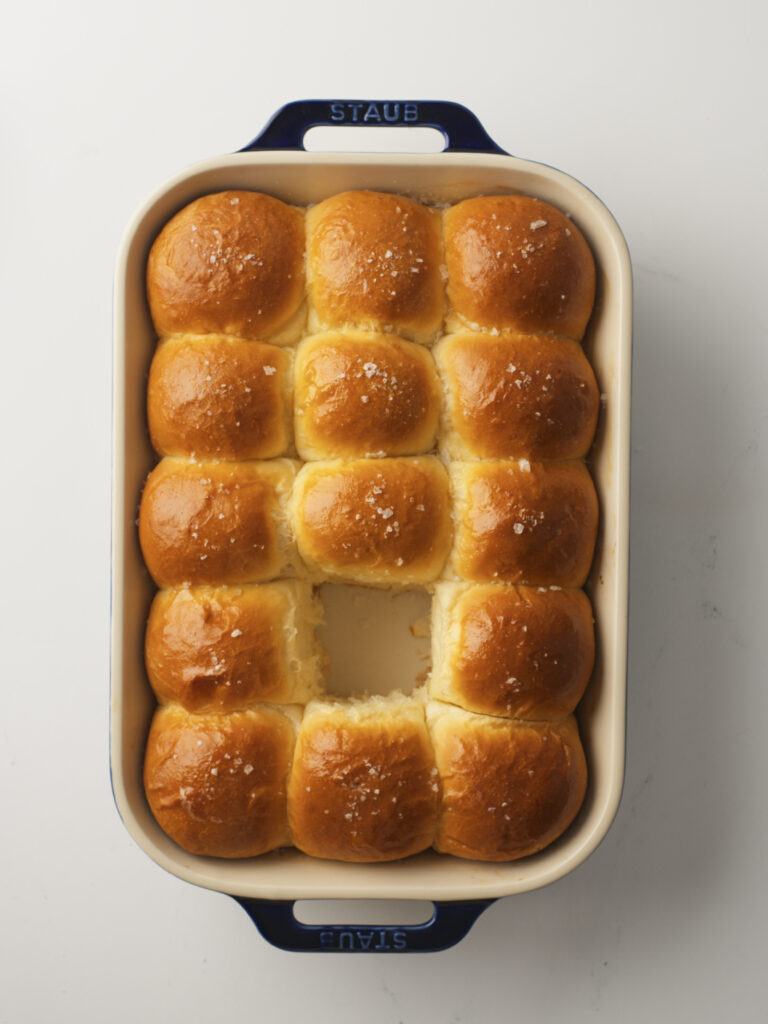
There’s nothing like a basket of warm, homemade soft dinner rolls. Unfortunately, if you make these for your family, you ‘re going to become the designated roll maker for life. Welcome to my club! Consider this your ultimate guide to the best Thanksgiving, Christmas and every other holiday dinner rolls.
Why you'll love my recipe
Quick and easy preparation
Directions are very straightforward and easy to follow. You will be blown away at how amazing it will turn out on your first try!
Extremely soft
I mean, these easy soft dinner rolls double as a pillow and midnight snack.
Healthier than store bought
Did you know a typical store bought bread has over 10-15 ingredients?! My recipe contains 6 wholesome and fresh ingredients.
Perfect for beginners
This is my fool-proof recipe that even beginner bakers can get perfect results.
Ingredients and substitutes
Whole milk: This recipe has not been tested with other milks.
Flour: Bread flour is preferred and works best. If needed, substitute with half all-purpose.
Sea salt: Balances out the sweetness.
Yeast: This recipe uses instant yeast but you may use active dry yeast instead. See my notes in the recipe for special instructions. Read more about the different types of yeast here.
Eggs: This is what adds richness.
Butter: Adds moisture, richness and creates a soft crumb with buttery flaky layers.
Honey: It contributes to the golden crust, adds flavor and helps naturally slow down mold growth. Honey is used in the dough and brushed over the rolls after baking.
For the rest of the ingredients, please see the recipe index card below!
What type of yeast should I use?
Instant yeast can mixed directly with dry ingredients and active dry yeast must be dissolved in warm liquid first to be “activated” or proofed before use. First, heat up your milk or water until its lukewarm, about 110°F. Stir in the active yeast and a pinch of sugar. Let it sit for 5-10 minutes until its foamy or bubbly.
What is the best pan to use?
You can use any non-stick pan you have on hand, preferably 9″x13″ size. Glass is a very poor conductor of heat. I do not recommend it when making any breads. I love my non-stick baking pans from USA Pans. I use it for all my focaccia recipes too. Shop my exact 9″x13″ Baking Pan here (Affiliate link)
How to shape the dough
Step 1
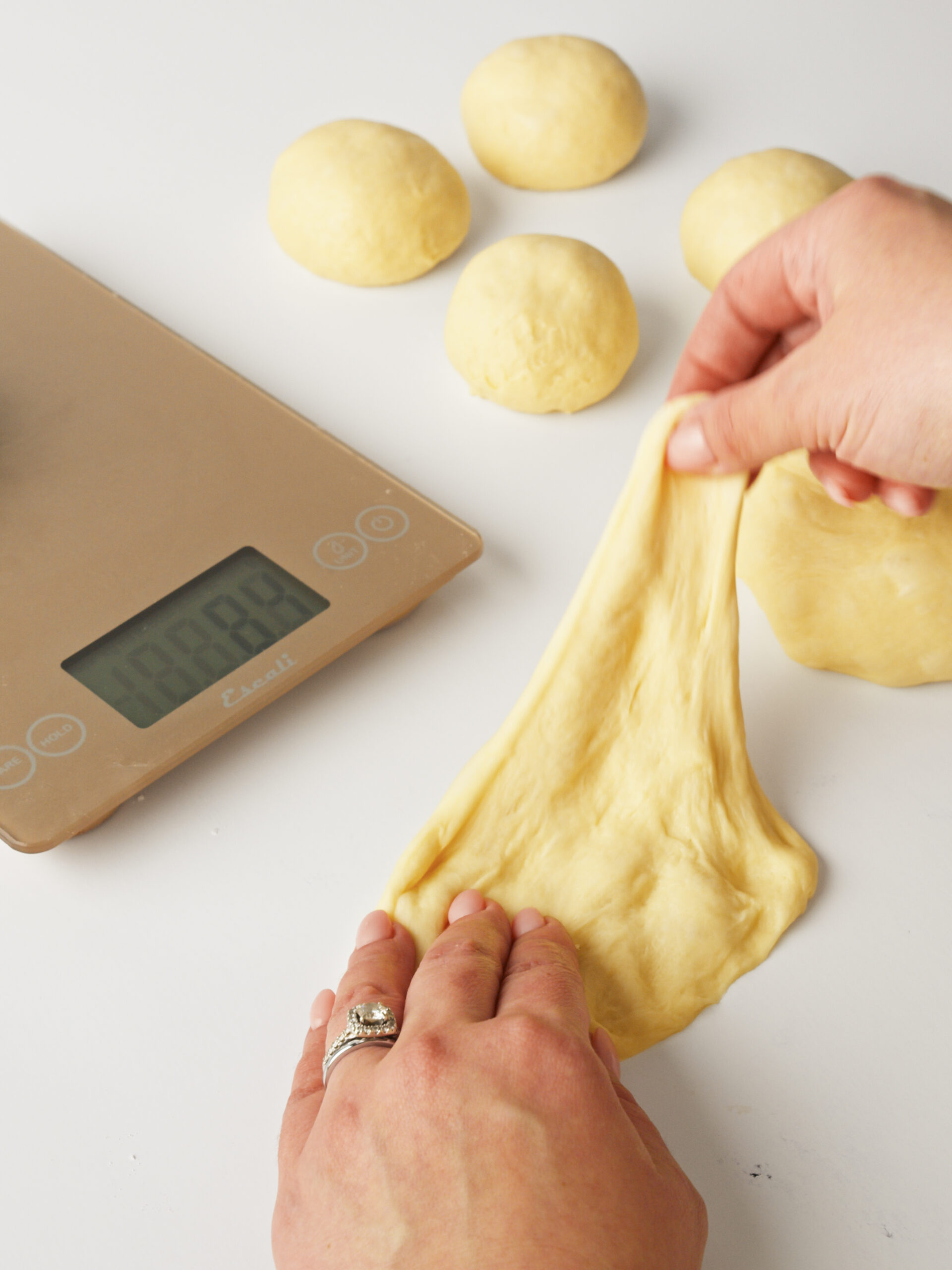
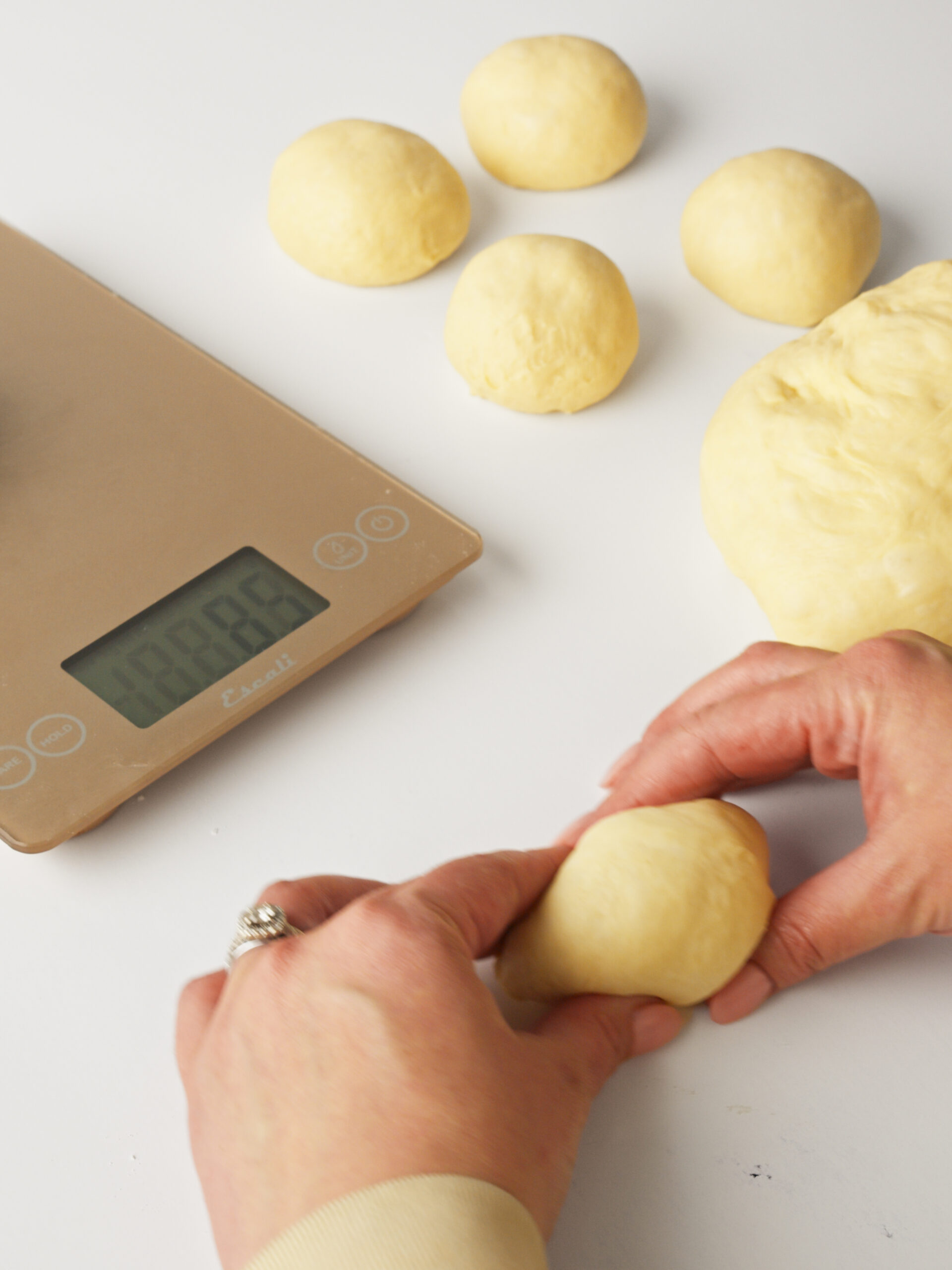
Punch the dough down and divide into 15-24 equal pieces. Larger rolls about 85g each, smaller rolls around 50-60g.
Step 2
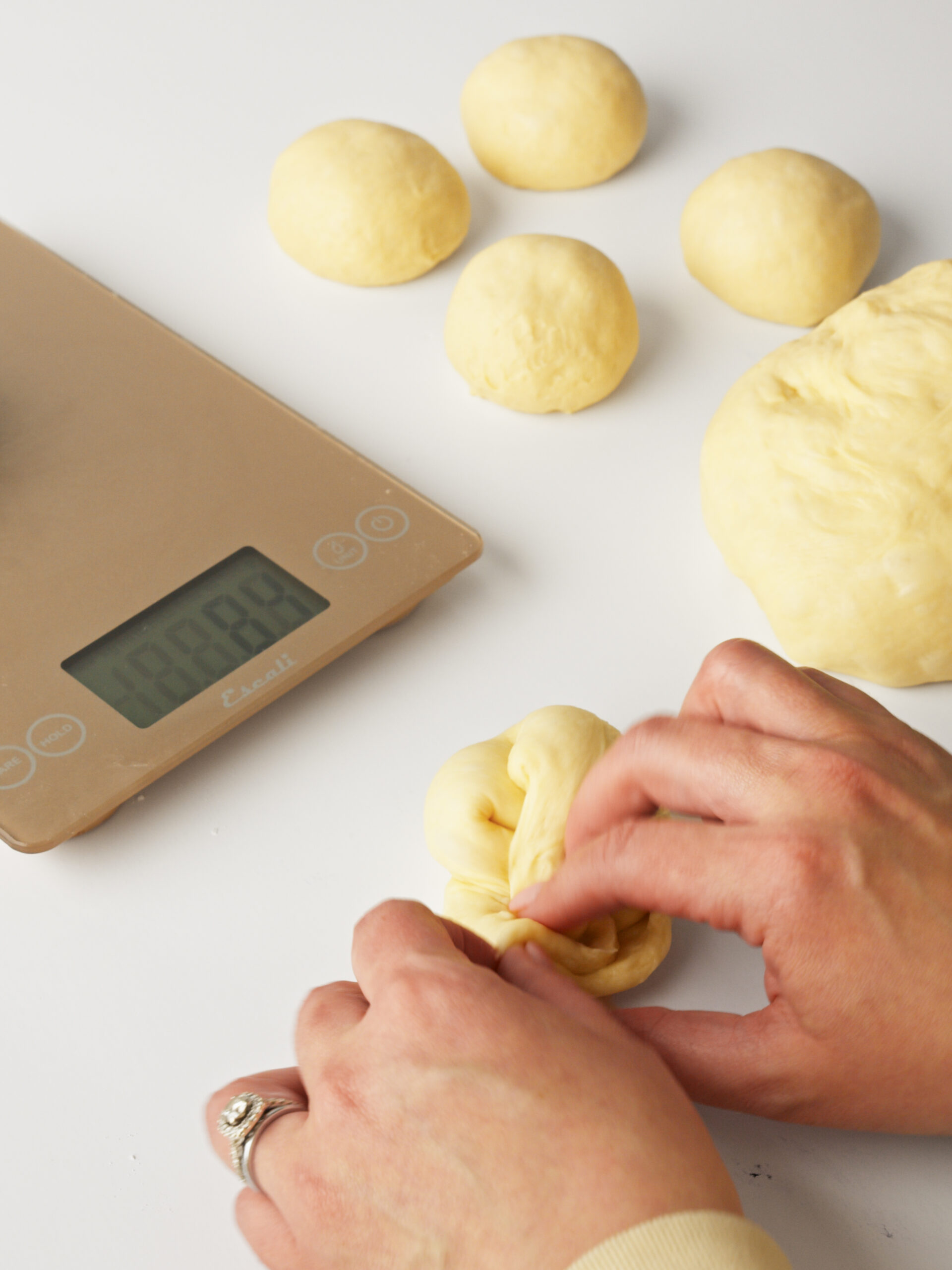
Working with one ball at a time, use your fingertips to gently flatten the dough piece into a square. Then, grab the four corners and pinch the seams together at the top, resembling a dumpling.
Step 3
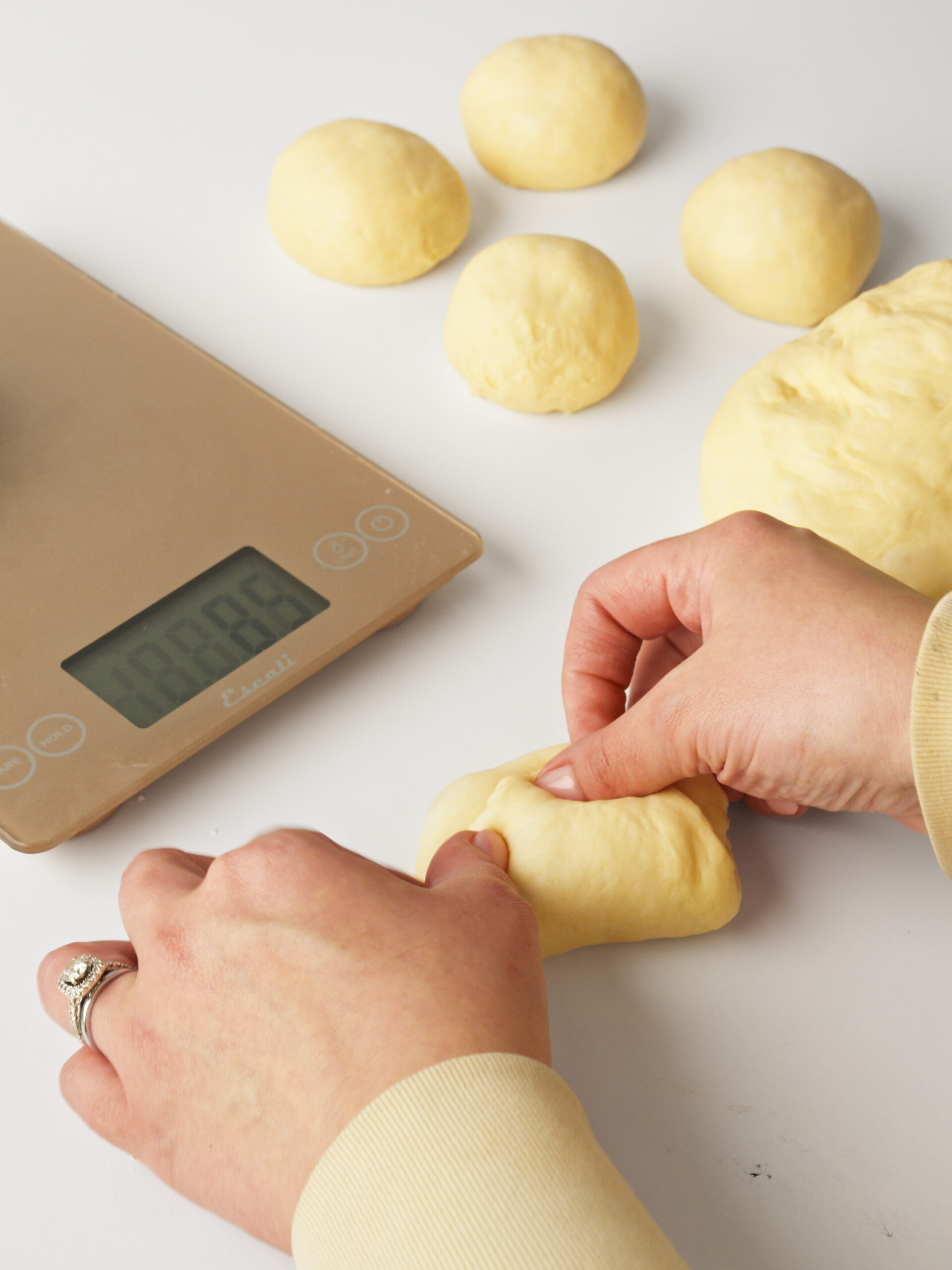
Flip the ball seam side down and with the back of your palm or fingertips, use the resistance of the surface to move in a circular motion. This smooths out the round shape.
Step 4
Repeat until all the dough pieces are rolled. Cover loosely with plastic wrap or a light tea towel until very puffy and doubled in size. This could take between 40 minutes to 1 hour.
How to make dinner rolls
Prepare the dough
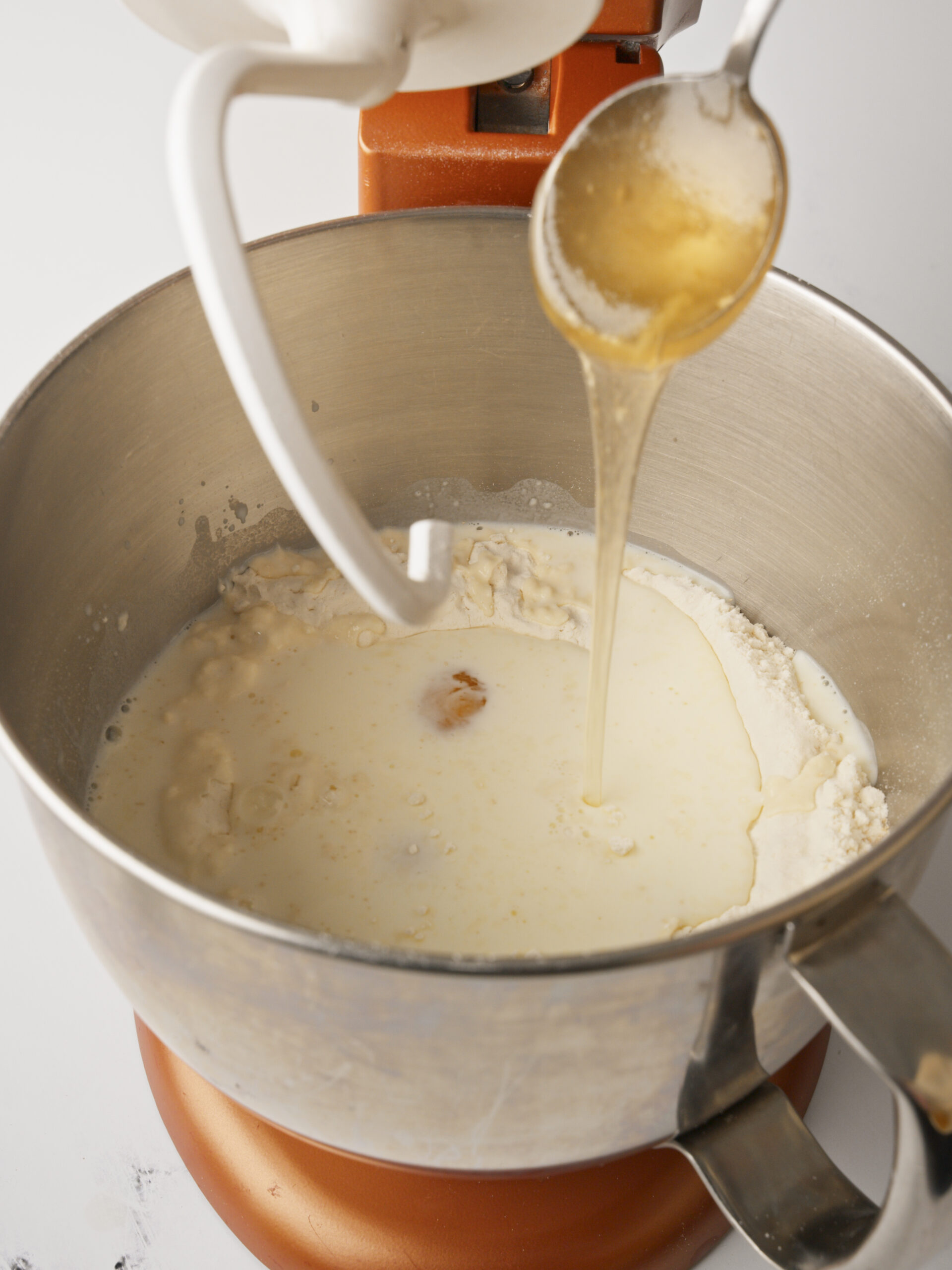
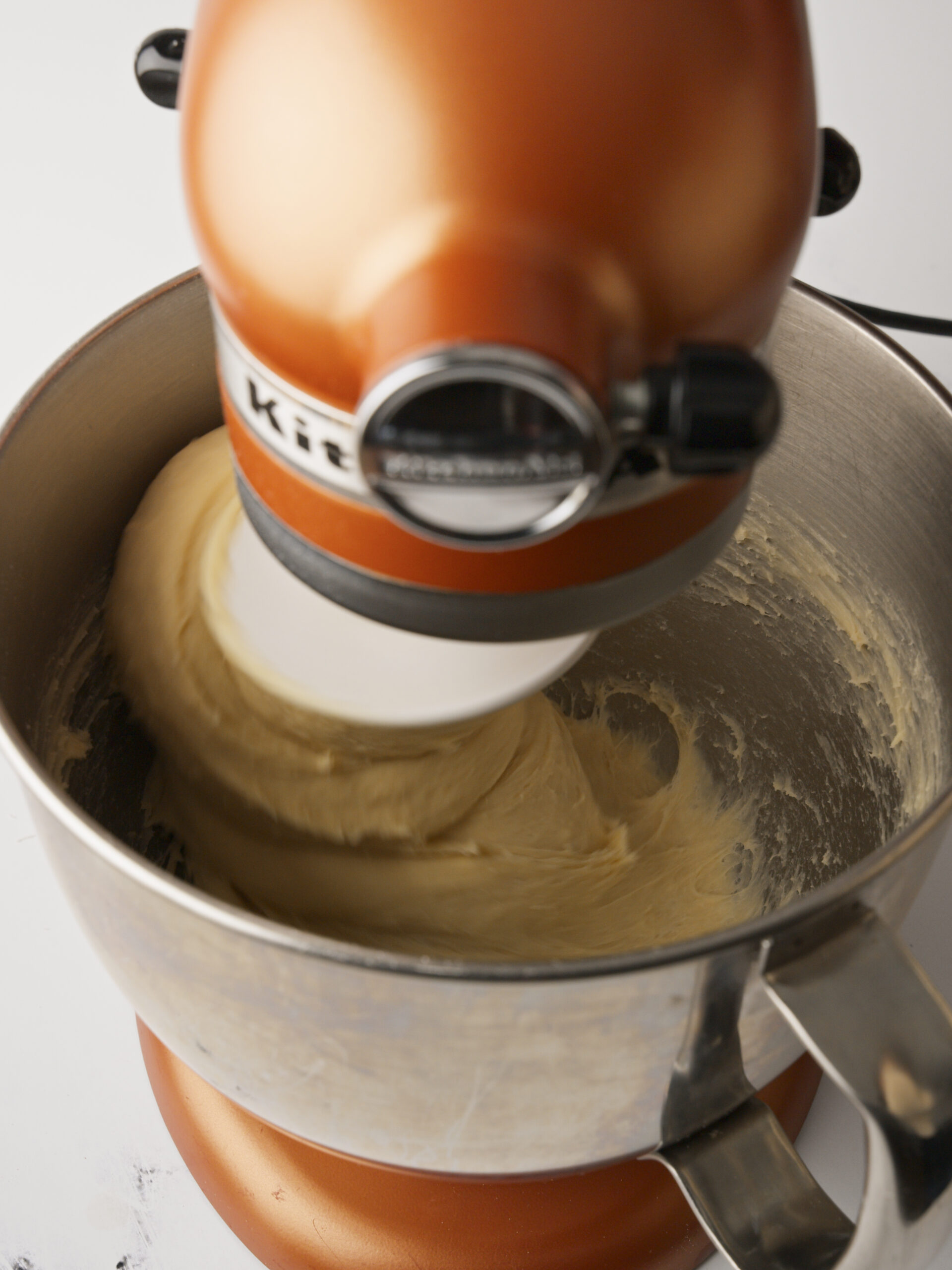
In a large stand mixer bowl, combine all the ingredients except the butter. Mix until most of the flour is absorbed, then add the softened butter, one tablespoon at a time. Knead on medium speed for 12-15 minutes until the dough is soft, smooth and elastic.
First rise
Oil your fingers. Use your hands to shape the dough into a round ball and place in a large greased bowl. Cover with plastic wrap and let it rise for about 1-1½ hours or until puffy and doubled in size.
Shaping
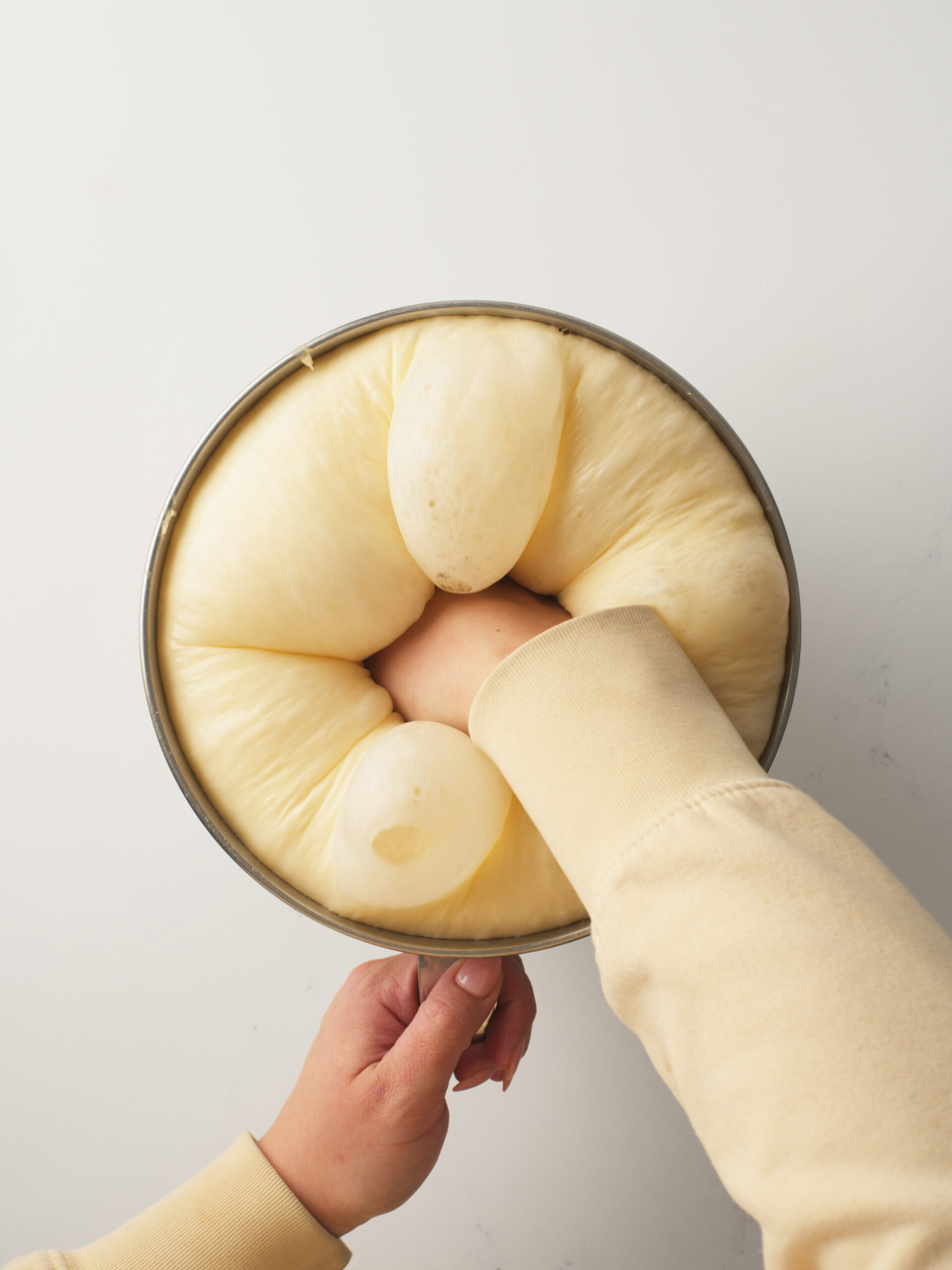
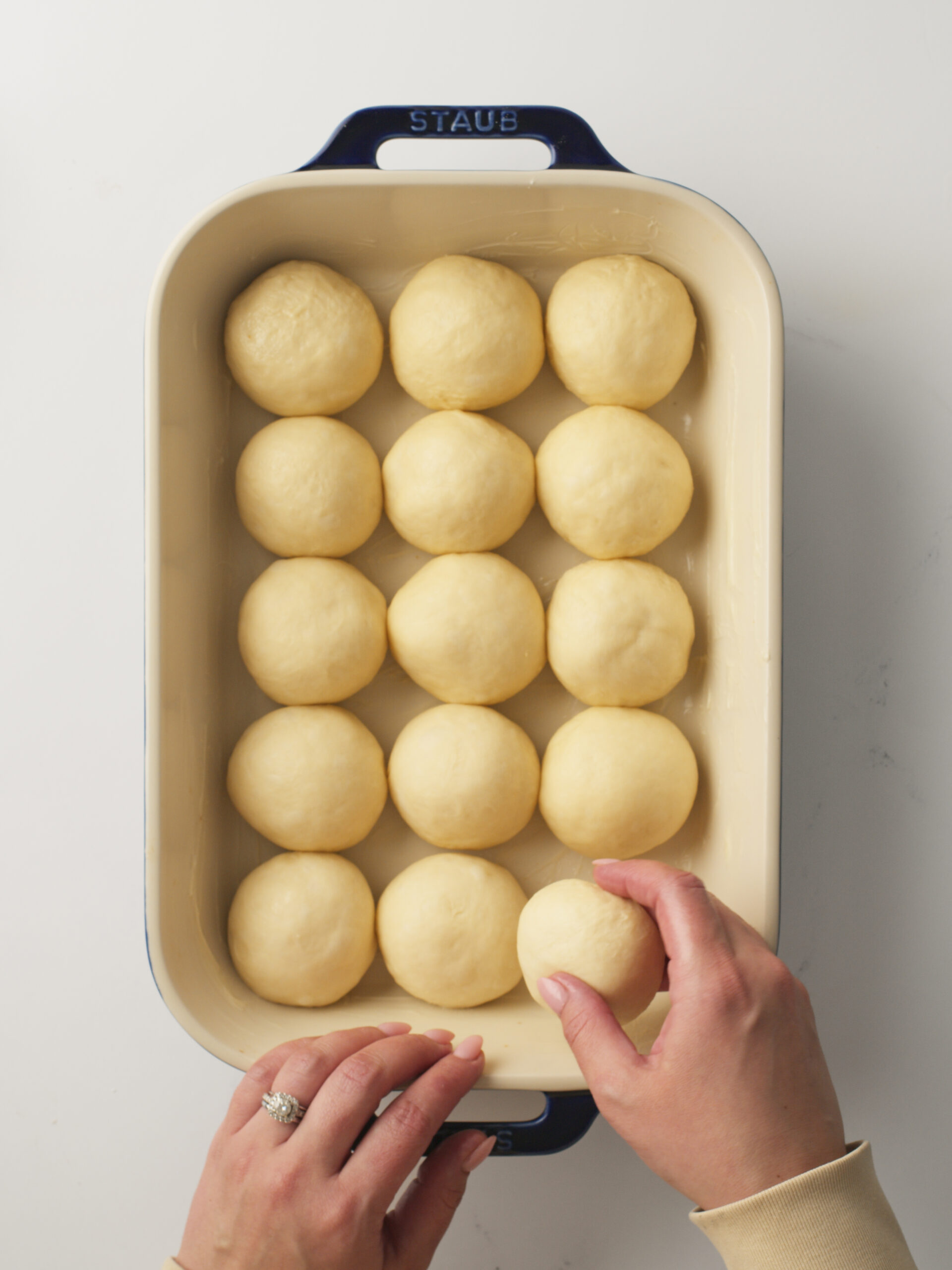
Punch the dough down and pour onto clean, dry surface. Do not flour. You need the resistance of the surface to shape the rolls. Once the dough is done rising, divide the dough into 15 equal pieces for large rolls but up to 24 small rolls. Shape into round balls and place them in a buttered 9″x13″ baking pan.
Second rise
Cover with plastic wrap and let it rise for about 40 minutes to 1 hour until very puffy and doubled in size.
Preheat the oven
While the dough is rising, preheat the oven to 350°F.
Bake
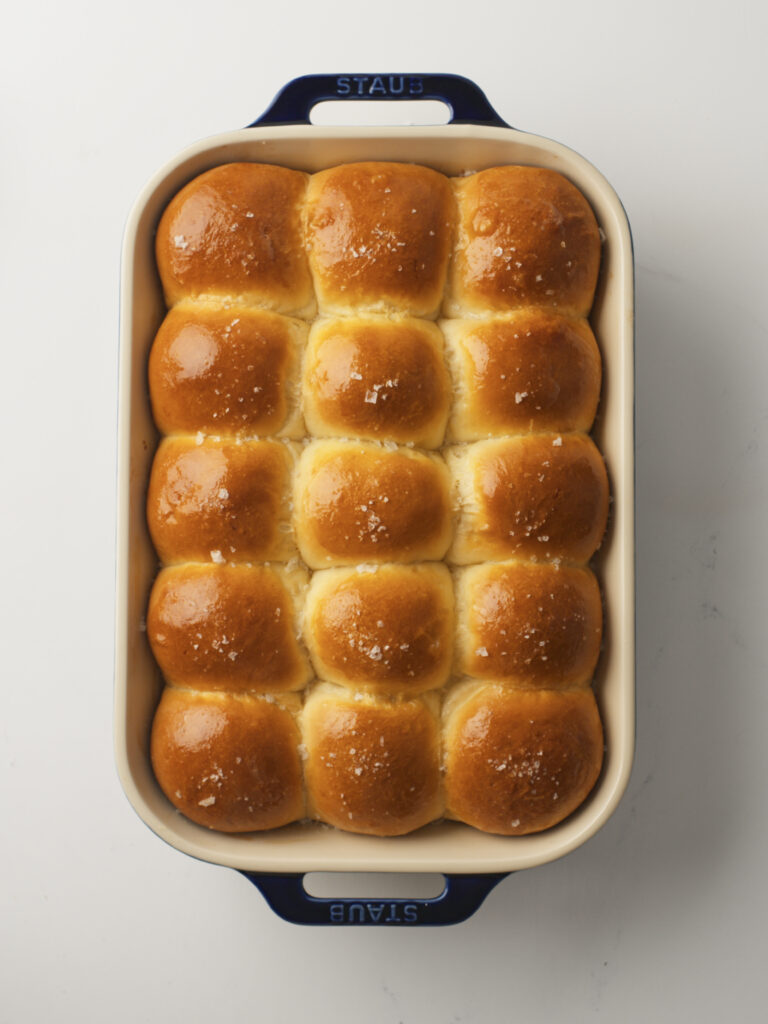
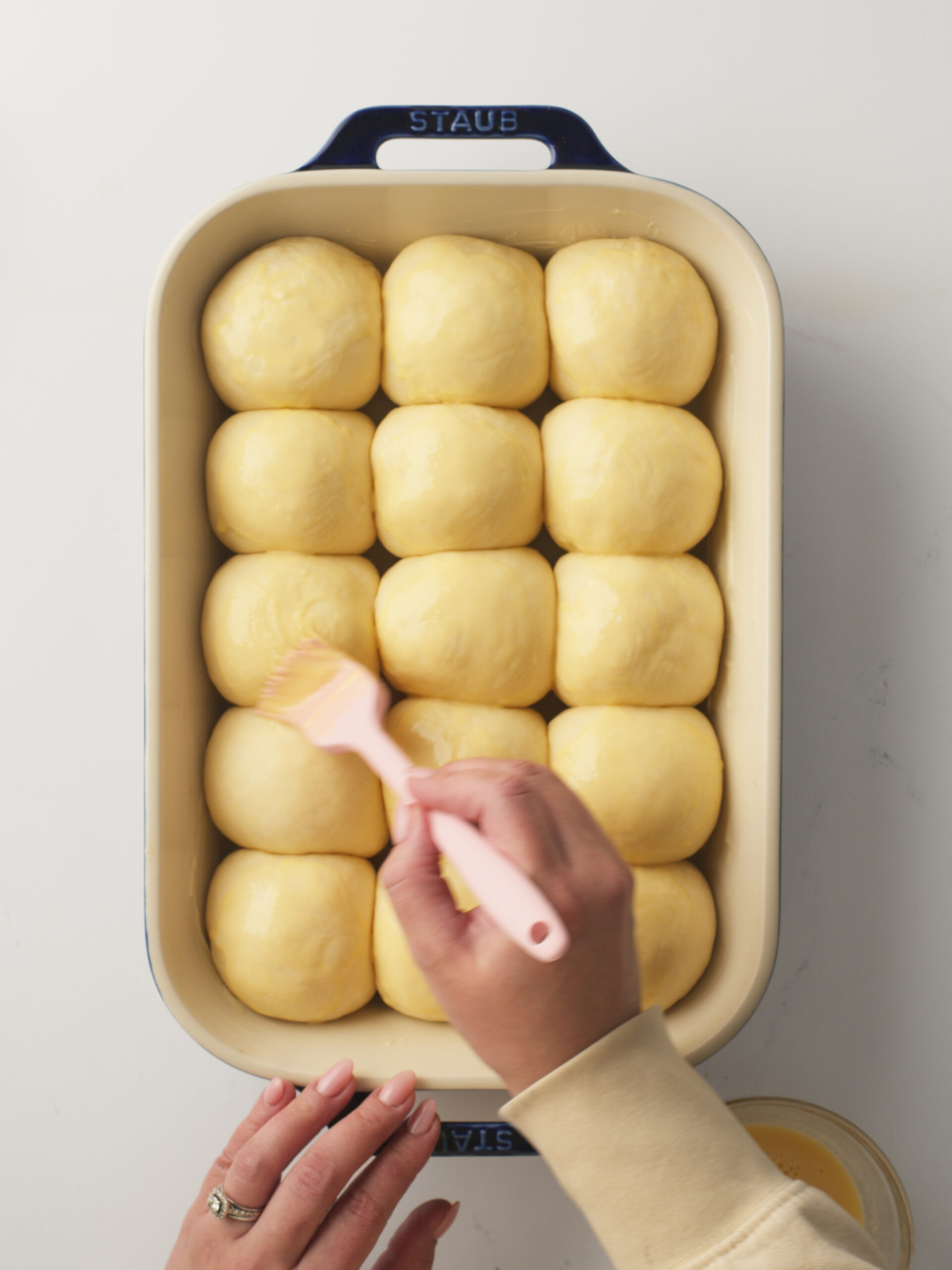
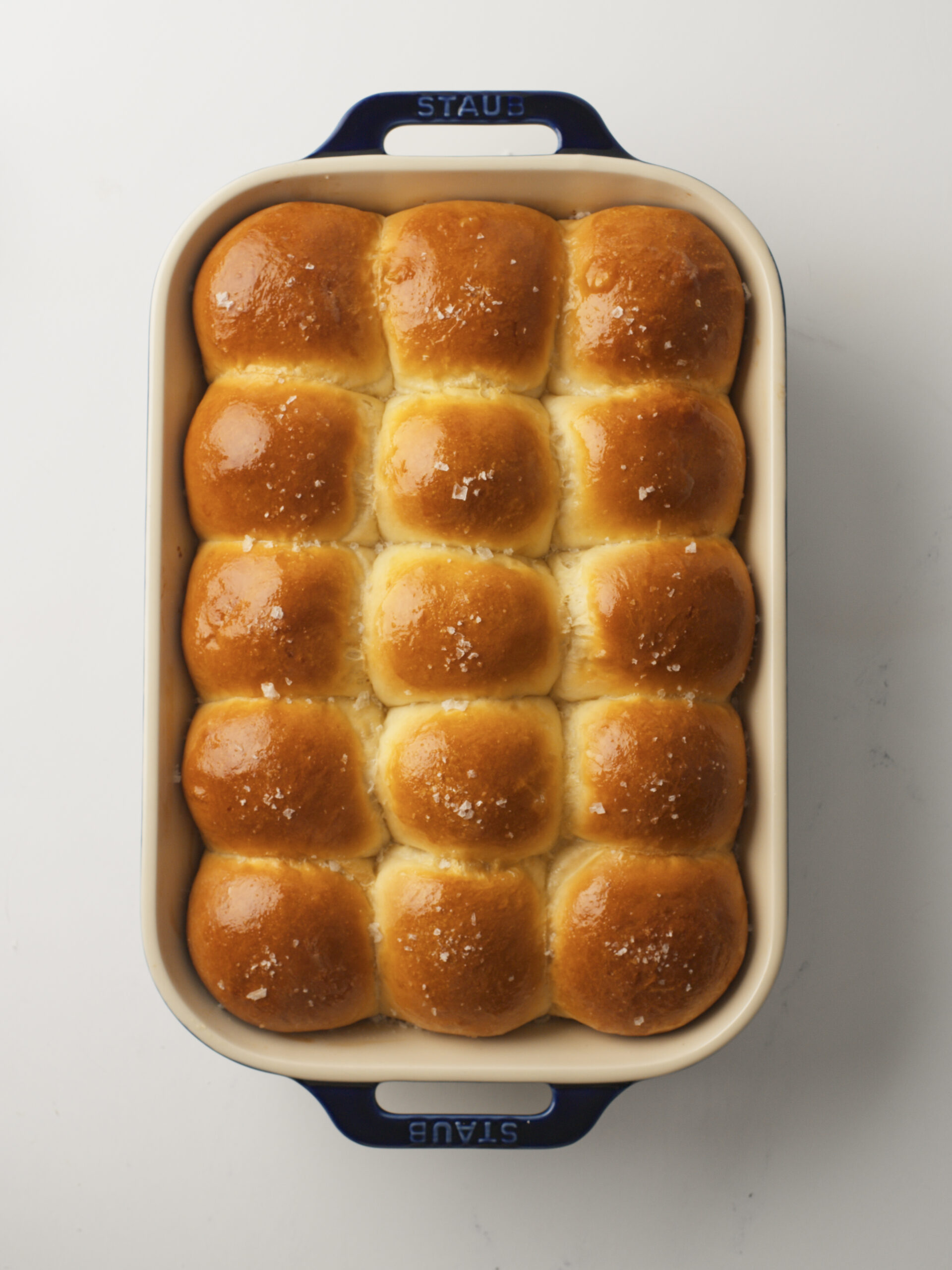
Brush over the tops with the egg wash and place the pan in the middle rack of the oven. Bake large rolls for 34-38 minutes until deep golden brown on top. Smaller rolls may bake for 25-30 minutes. Brush the tops with melted butter, honey and sprinkle with flaky sea salt.
Can I make this recipe ahead of time?
Divide the dough into equal pieces, shape into round balls and place them in a buttered baking pan covered with plastic wrap. Do not let them rise at room temperature. Place in fridge for 2-6 hours. Bring to room temperature for anywhere between 2-3 hours before baking.
Can I make this without a standmixer?
You can knead by hand. It’ll take a bit longer to knead, about 12-15 minutes. The dough should be elastic, soft and stretchy.
Why is my dough sticky?
A little stickiness is normal. Lightly oil your hands if needed. It becomes less tacky and much more manageable after the first rise.
Expert tips from my test kitchen
Add butter gradually
Butter enriches the dough but must not be mixed at the same time as the other ingredients. Once the wet and dry ingredients have been mixed and absorbed, add a Tablespoon of butter at a time.
Shape properly
Some may say this step is extra but individually weighing each dough ball gives you perfectly equal dinner rolls and makes baking easier.
Measure flour by weight
Flour and milk are easily over-measured. For best accuracy, use a kitchen scale. Shop my exact scale here. (affiliate link)
Why is my dough not rising?
There is nothing more frustrating than dough that refuses to rise. Below are four common reasons why your dough is not rising and practical solutions to get your dough back on track.
Yeast issues
The problem: Yeast is the driving force behind the rise but if it’s expired, stored improperly or not activated correctly, you dough won’t rise.
How to fix it: Store yeast in a dry cool place and check the expiration date. Mix your yeast with warm milk or water and a pinch of sugar. Within 5-10 minutes, it should foam. No foam? The yeast is dead – replace it!
Temperature problems
The problem: Dough is sensitive to temperature. If it’s too cold, the yeast slows down or stops working entirely.
How to fix it: Typically, your kitchen counter should be just fine! If your kitchen is drafty, use the oven method. Place the bowl wrapped in plastic wrap and covered with a tea towel in the oven with the light turned on and the oven off.
Too much sugar or salt
The problem: Excess sugar can dehydrate yeast and too much salt can inhibit yeast activity.
How to fix it: Mix the salt and sugar in the dry ingredients before adding the yeast. This helps the yeast avoid direct contact with the salt during activation.
Undeveloped gluten
The problem: In order for the dough to rise, it requires a well-developed gluten network to trap air and rise. Insufficient kneading results in flat dough.
How to fix it: Enriched doughs with eggs and butter take longer to come together. Knead until the dough is smooth, elastic and tacky but not too sticky. This can take between 12 to 15 minutes and most importantly, give the dough enough time to rise. Sometimes, all it needs a longer nap.
How to store leftover dinner rolls
Although we recommend enjoying these freshly baked rolls same day, they store well at room temperature for up to 2 days. Place leftovers in an airtight container or use the same pan you baked them in and wrap with plastic wrap.
Fresh bread tastes better the day it was baked. Homemade bread will also go bad quicker because it doesn’t contain additives that extend shelf life like most bread at the grocery store. Below are a few ways we like to store leftovers.
Freezing rolls
Once cooled, wrap tightly in plastic wrap and place in a resealable bag. Reheat in the oven to restore softness and freshness.
Do not store in the refrigerator
This will cause your bread to become stale and dry faster. It holds well at room temperature with the right precautions.

Soft Dinner Rolls
Patricia Martinescu from Bake Cook RepeatIngredients
- 5½ cups bread flour, fluffed, spooned and leveled may substitute with all-purpose flour
- 1½ cups whole milk warm
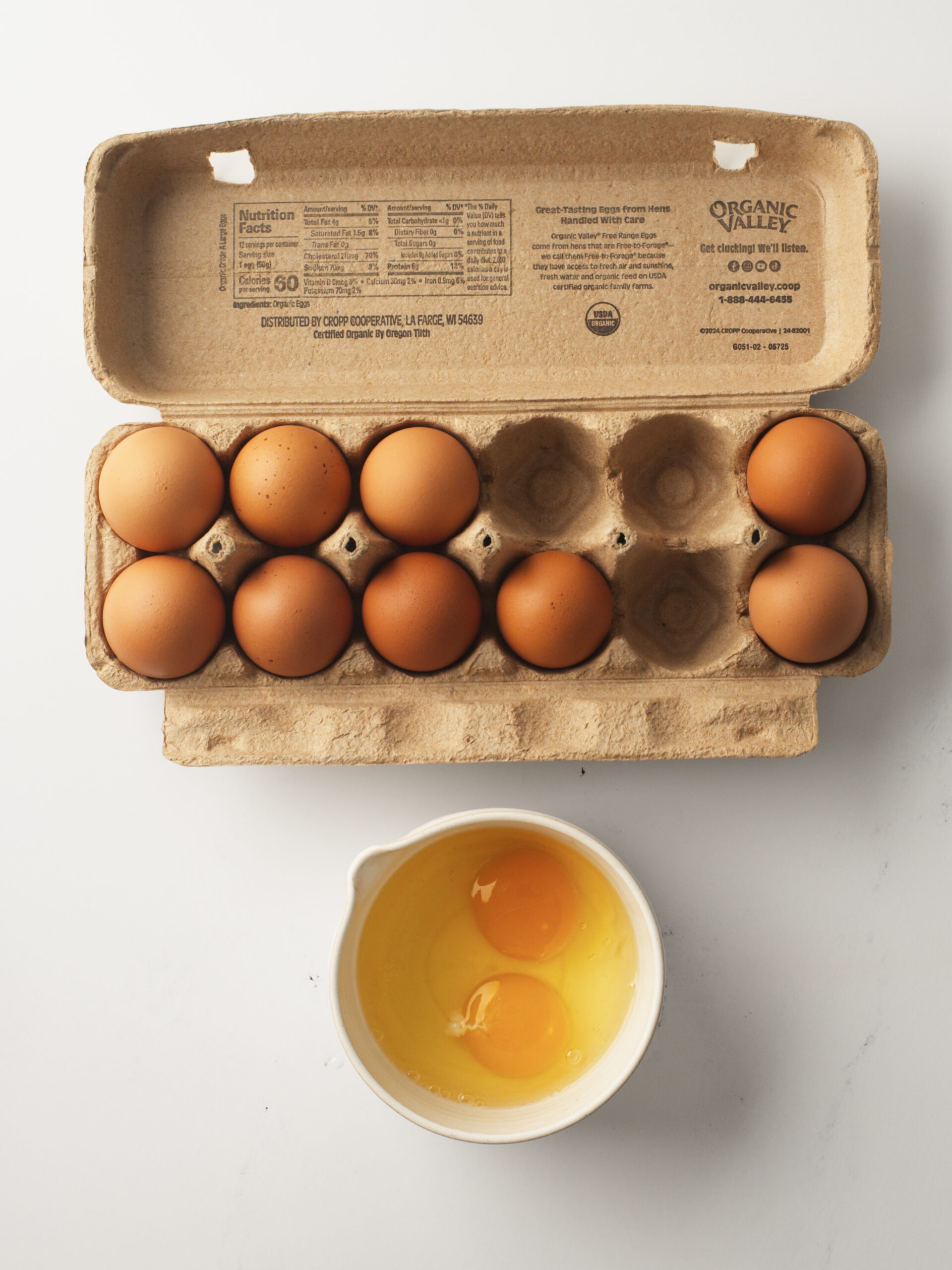
- 2 large eggs
- 4 Tablespoons unsalted butter softened
- 3 Tablespoons honey
- 2 Tablespoons heavy cream
- 2 teaspoons instant yeast
- 2 teaspoons sea salt
- 1 egg + 1 Tablespoon heavy cream, for the egg wash
Instructions
Before you start
- Use a kitchen digital scale for measuring flour and milk as both are easily over-measured. Use the toggle button in the ingredients section above to go between cups and grams. If you don’t have a scale, fluff the flour with a fork in its container, and then spoon it into the measuring cup before leveling off with a flat edge. Measure liquids at eye level.
Prepare the dough
- I highly recommend using a kitchen digital scale for measuring flour and milk as both are easily over-measured. In a large stand mixer bowl, combine flour, yeast and salt. Make a well in the center and add the warm milk, honey, heavy cream and eggs.5½ cups bread flour, fluffed, spooned and leveled, 1½ cups whole milk, 2 large eggs, 3 Tablespoons honey, 2 teaspoons instant yeast, 2 teaspoons sea salt, 2 Tablespoons heavy cream
- Use the dough hook attachment and mix until most of the flour is absorbed, then add the softened butter, one tablespoon at a time.4 Tablespoons unsalted butter
- Knead on medium speed for 12-15 minutes until the dough is soft, smooth and elastic. At the very end of kneading, increase the mixer speed to high for a few seconds until the dough removes from the sides of the bowl. You might be tempted to add more flour because sticky dough is uncomfortable. Don't do it! Oil your fingertips to make the dough manageable.
First rise
- Oil your fingers. Use your hands to shape the dough into a round ball and place in a large greased bowl. Cover with plastic wrap and let it rise for about 1-1½ hours or until puffy and doubled in size.
Shaping
- Punch the dough down and pour onto clean, dry surface. Do not flour. You need the resistance of the surface to shape the rolls.
- Once the dough is done rising, divide the dough into 15 equal pieces for large rolls but up to 24 small rolls. Shape into round balls and place them close in a buttered 9"x13" baking pan. Use more than one pan but bake only one pan at a time.
Second rise
- Cover with plastic wrap and let it rise for about 40 minutes to 1 hour until very puffy and almost doubled in size.
Preheat the oven
- While the dough is rising, preheat the oven to 350°F.
Bake
- In a small bowl, whisk together egg with a splash of heavy cream. Remove the plastic wrap, brush over the tops with the egg wash and place the pan in the middle rack of the oven.
- Depending on the strength of your oven, bake large rolls for 34-38 minutes until deep golden brown on top. Smaller rolls may bake for 27-30 minutes.
- Let the rolls cool in the pan. Brush the tops with melted butter, honey and sprinkle with flaky sea salt.
Nutrition
The provided nutritional value above is an estimate per serving. 100% accuracy is not guarenteed. Please see Nutrition Information Disclaimer in our Privacy Policy.
Nutrition Information Disclaimer