
Garlic Bread Focaccia
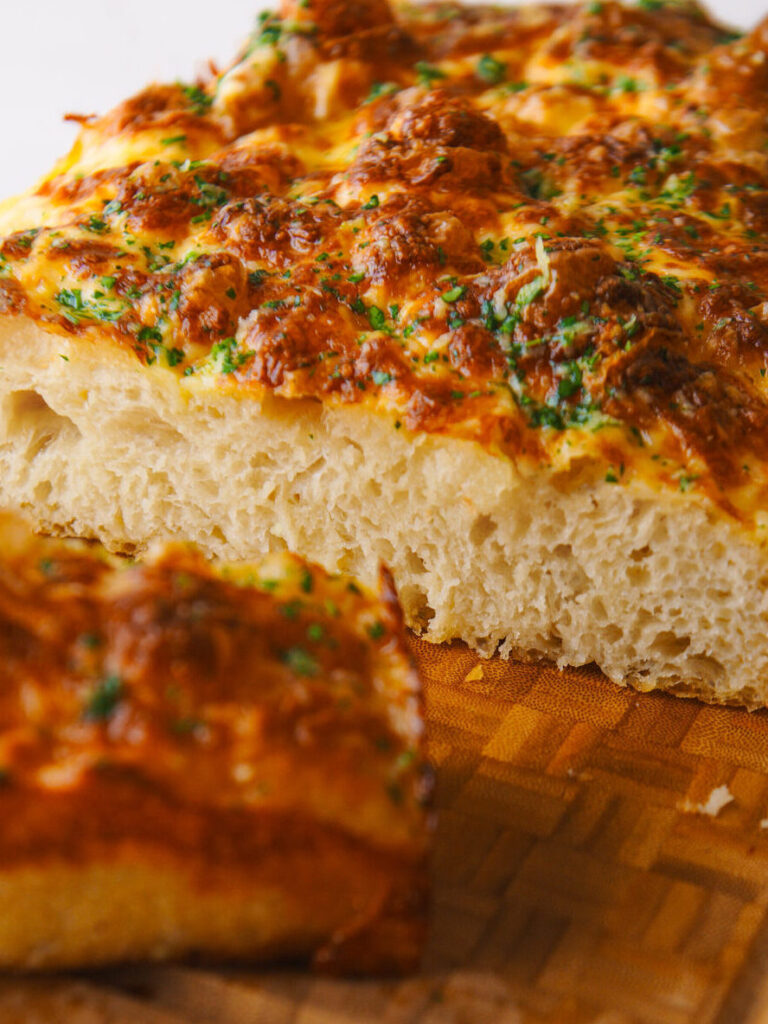
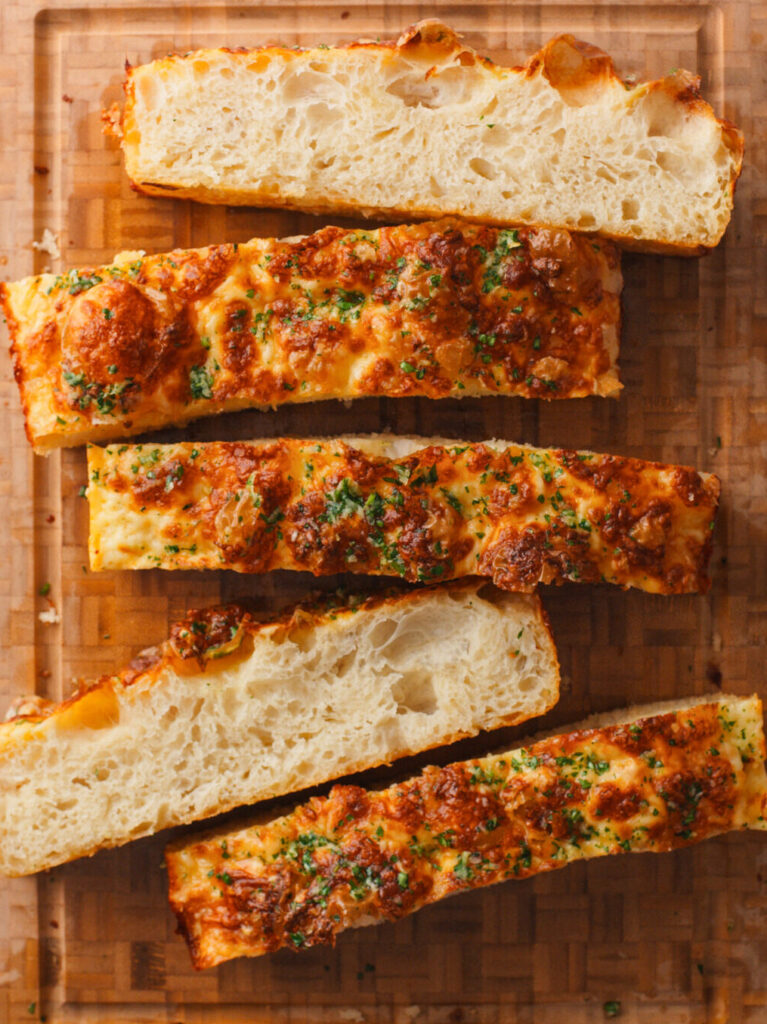
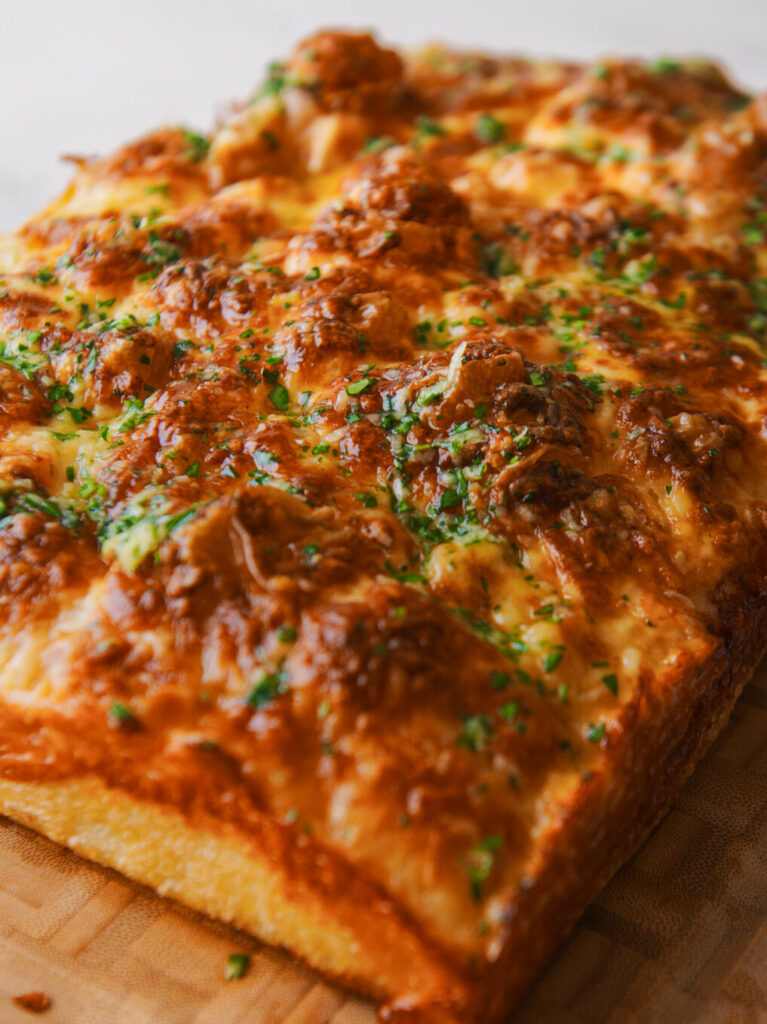
This Garlic Bread Focaccia is a version of my viral focaccia recipe but slathered in garlic butter and topped with a mix of mozzarella and gruyere cheese.
Ingredients
- 500 ml warm water
- 1 Tablespoon sugar
- 1 Tablespoon sea salt NOT table salt
- 2 teaspoons instant dry yeast (7 grams) see note for active dry yeast
- 1 Tablespoon olive oil
- 550 g bread flour
For the cheesy topping:
- 1 cup mozzarella
For the garlic herb sauce:
- 2 Tablespoons unsalted butter melted
- 2 Tablespoons olive oil
- 2 Tablespoons fresh parsley minced
- 3 garlic cloves minced
Click between "US Customary" or "Metric" button above to switch between conversions. For precise results, it's recommended to weigh your dry ingredients using a digital scale in grams as measuring in cups can have uncertainties.
Instructions
Make the dough
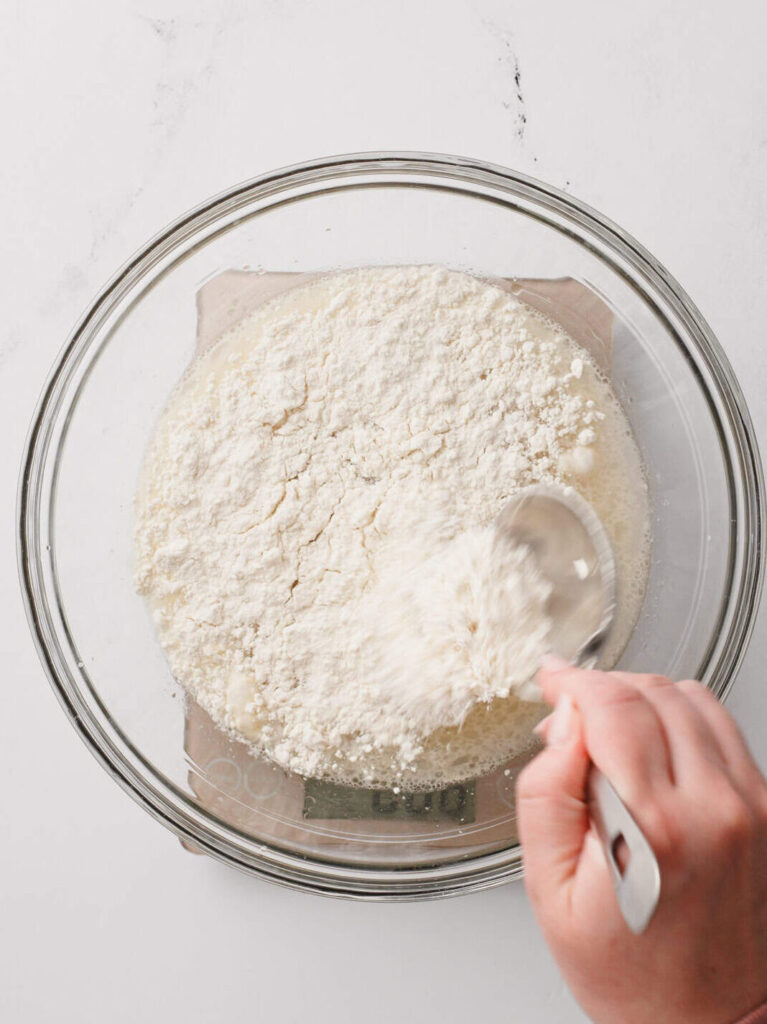
- To a large mixing bowl, add all the ingredients in order as listed except the flour. Whisk together, then add the flour. Use a Danish dough hook or the neck of a wooden spoon to mix for at least 1 minute until the dough is wet and sticky. Cover with a tea towel and allow the dough to rest for 10 minutes.Note: Instant yeast can mixed directly with dry ingredients and active dry yeast must be dissolved in warm liquid first to be "activated" before use. Measure out water from the recipe, stir in the active yeast with a pinch of sugar. Let it sit for 5-10 minutes until its foamy or bubbly. Note: This recipe uses sea salt, which has larger, coarser grains compared to fine table salt. This affects the quantity of salt and the saltiness in the bread. If you don't have sea salt, reduce the salt measurement to 2 teaspoons.500 ml warm water, 1 Tablespoon sea salt , 1 Tablespoon sugar, 2 teaspoons instant dry yeast (7 grams), 1 Tablespoon olive oil, 550 g bread flour
Stretches
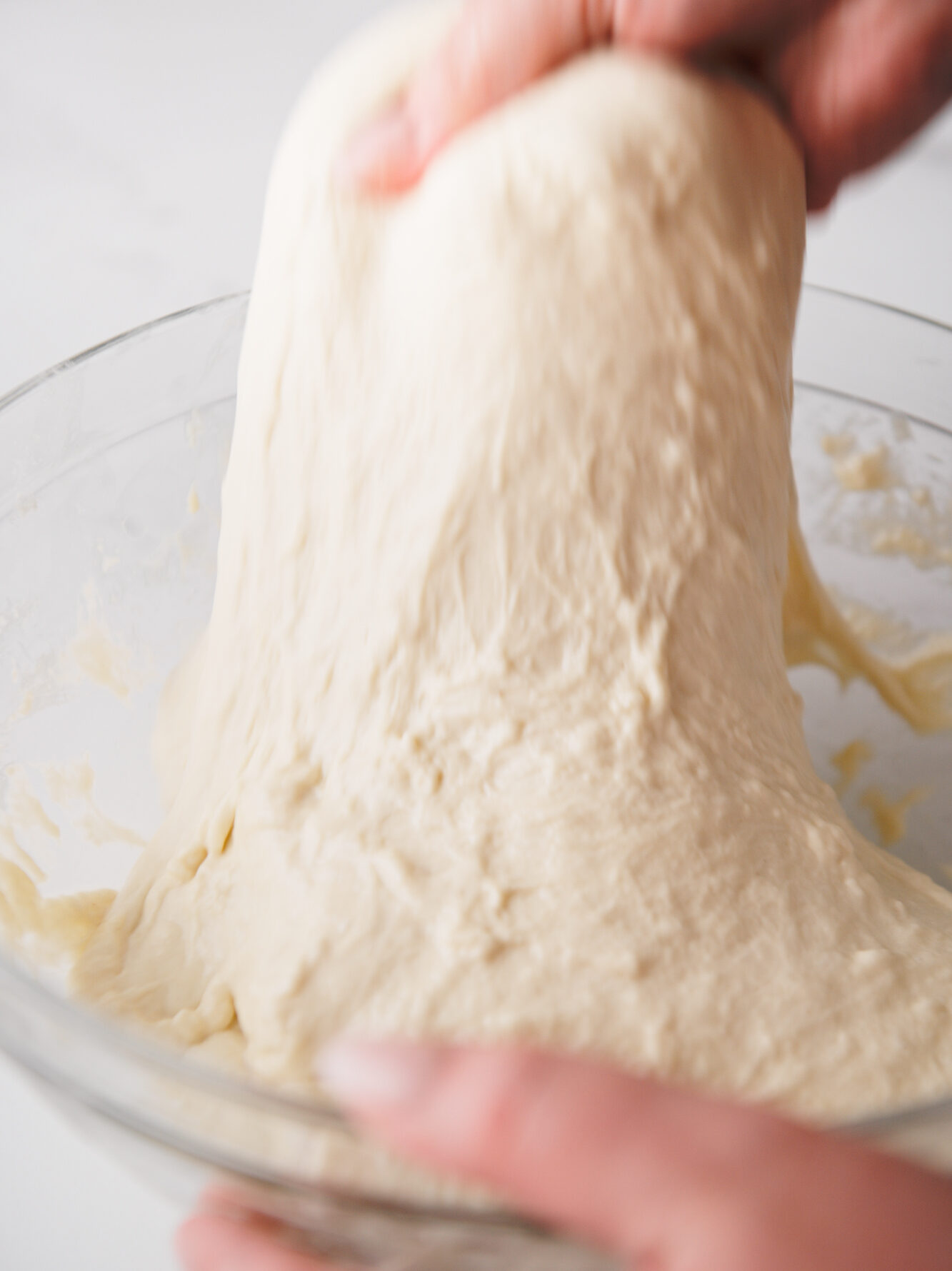
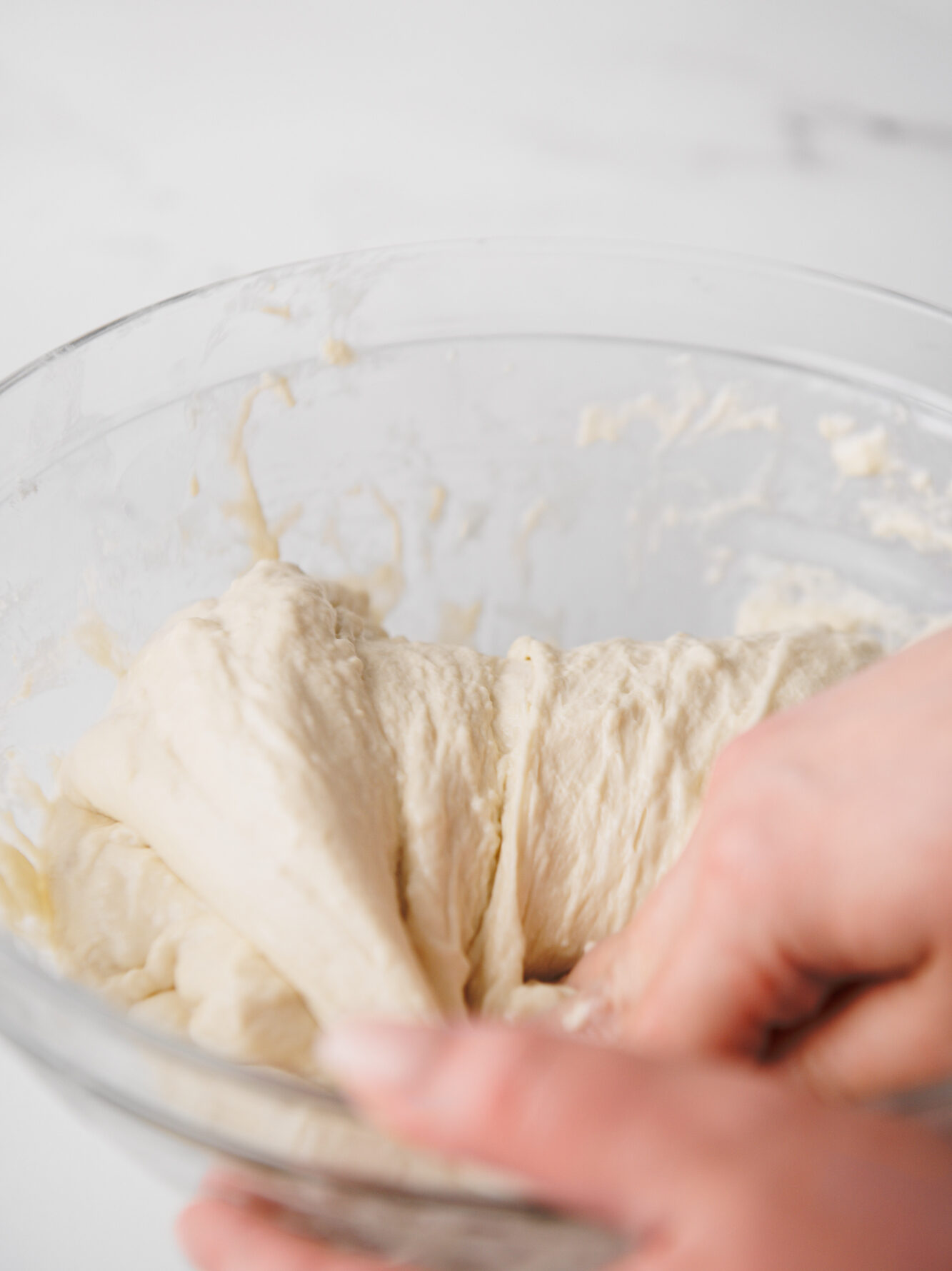
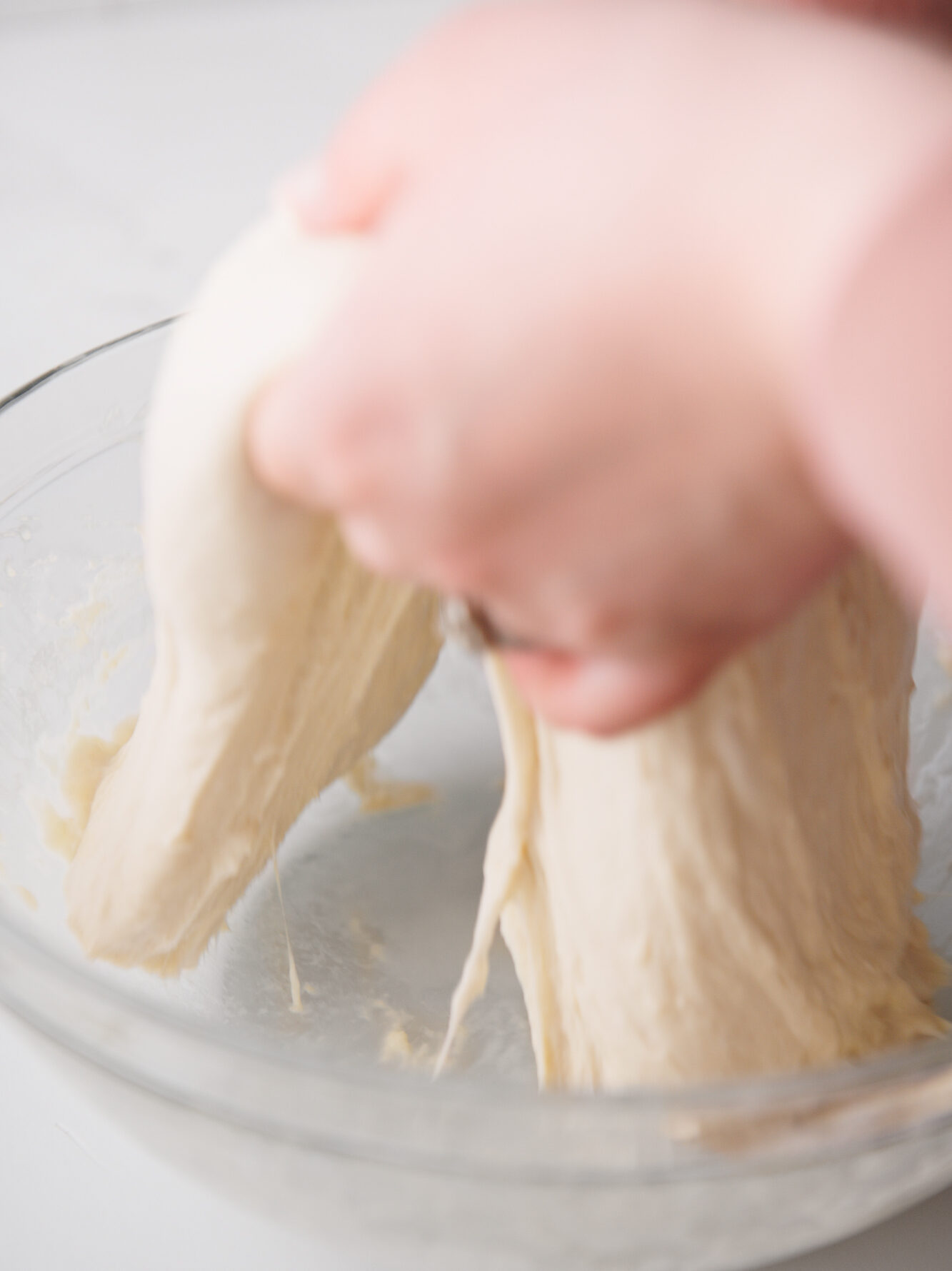
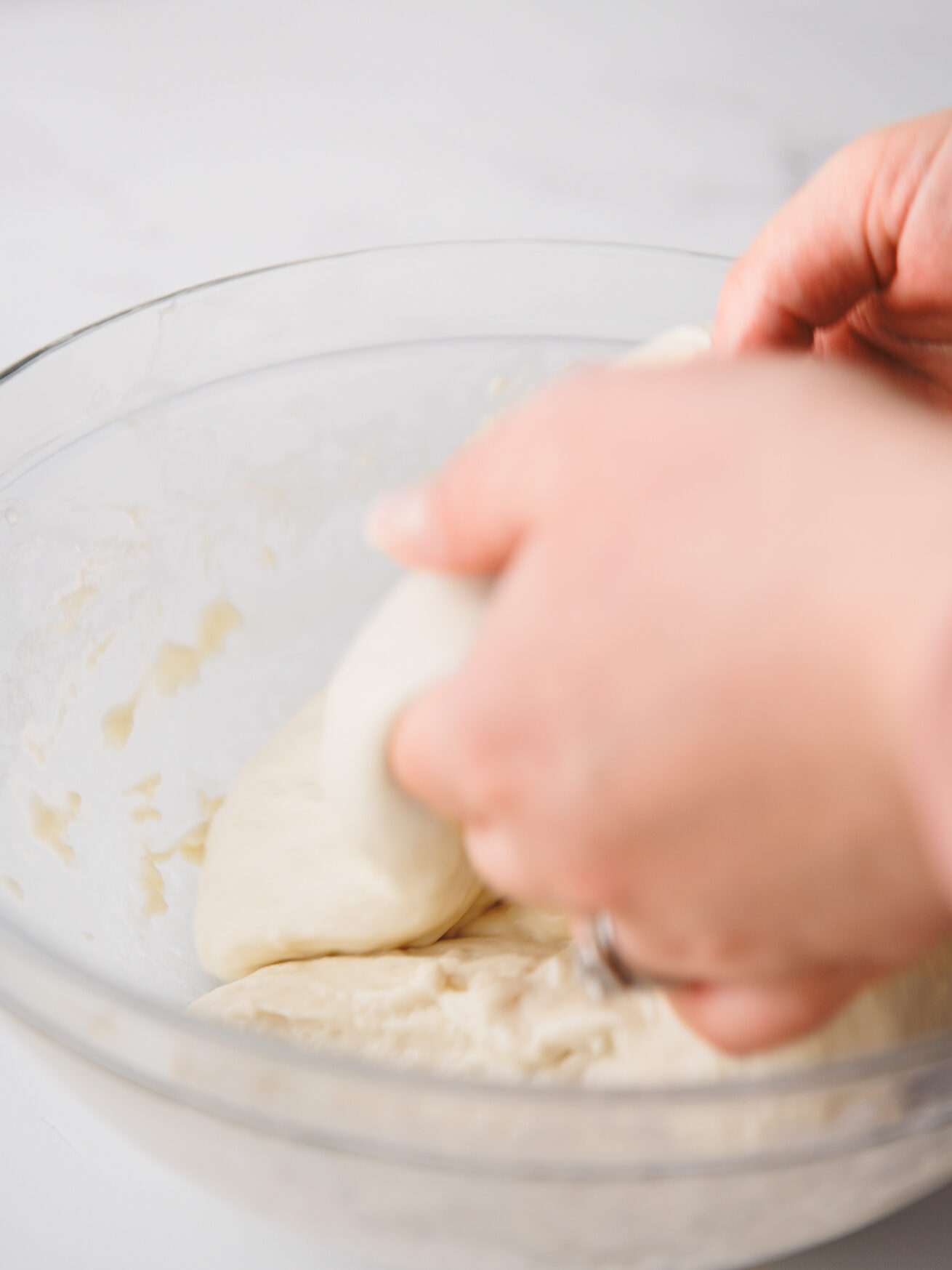
- Once the dough has rested for 10 minutes, it's time for the stretch and folds. For this recipe, I have recently adapted these two types of stretches below. See blog post above for step by step photos of these two stretches.STRETCH AND FOLD METHOD: This is the first type of stretch. First, wet your hands before proceeding as it will make it easier to handle the dough. Work your way around the dough like you are looking at clock. Perform a fold at 12, 3, 6 and 9 o’clock by pulling the dough up and over to the other side of the bowl. Cover with a tea towel for 10 minutes.
- COIL METHOD: This is the second type of stretch. Wet your hands again. Gently loosen the edges of the dough by pulling it away from the sides of the bowl. Place your fingertips under the dough, so that you can pick it up in the middle. Allow the dough to unstick from the bowl and fold using its own weight, while you support the middle. Turn the bowl 90° and repeat to perform another coil fold. Do this method 3 more times, 10 minutes apart. With each set of folds, the dough gluten structure gets stronger, making it easier to lift and fold.
First rise
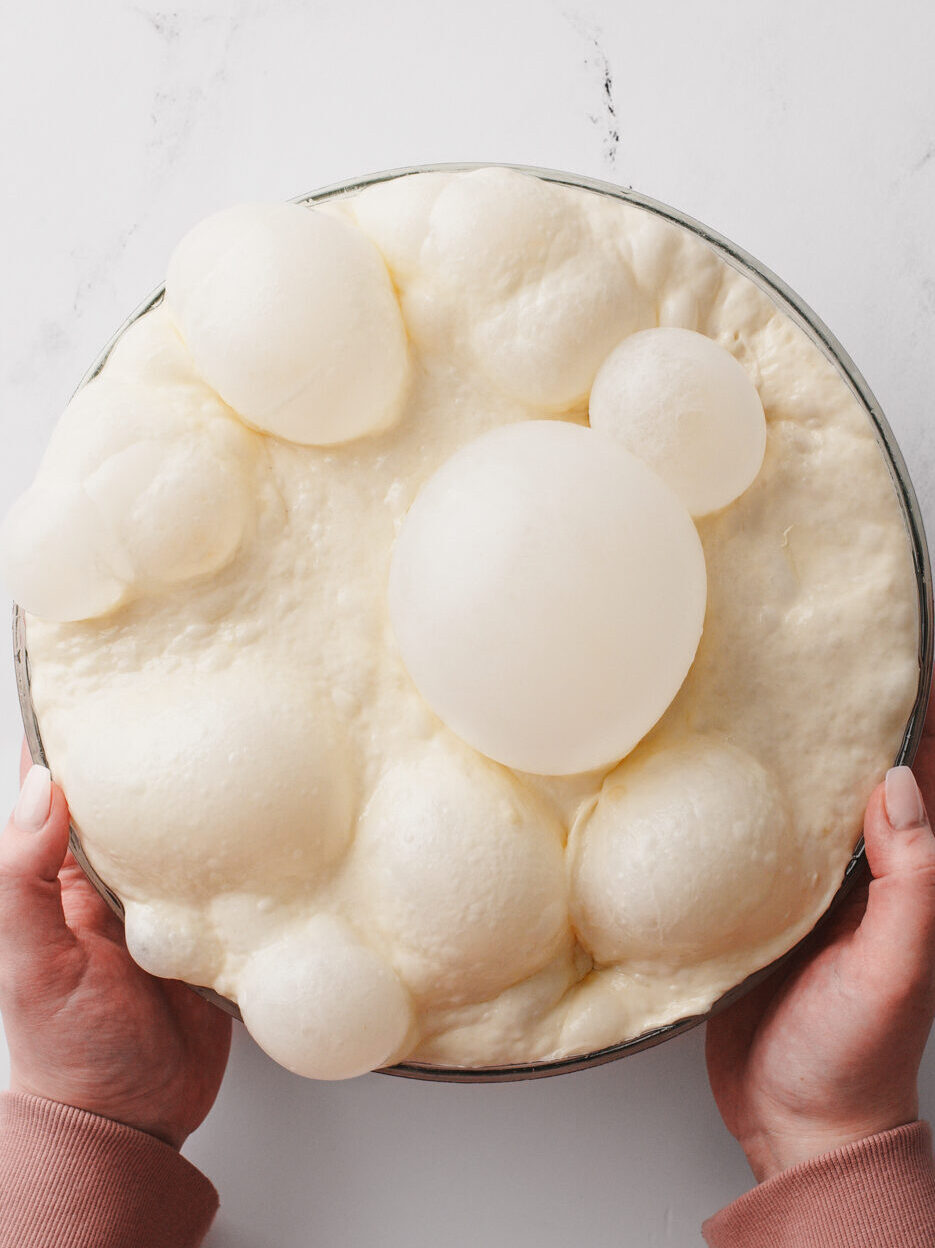
- Coat the entire focaccia and bowl with drizzle of oil, about 3 Tablespoons. Cover the bowl with plastic wrap and a tea towel. Let it rise in a warm spot at room temperature for at least 1 to 1½ hours or in the refrigerator for 4 to 12 hours.
Prep the dough
- Remove the plastic wrap. Move the bowl back and forth, opening up the bubbles and allowing the dough to breathe. Coat a generous layer of olive oil on the bottom of a 9"x13" inch aluminum, non-stick baking pan. For good measure, you may also line the bottom with parchment paper prior to drizzling the oil.
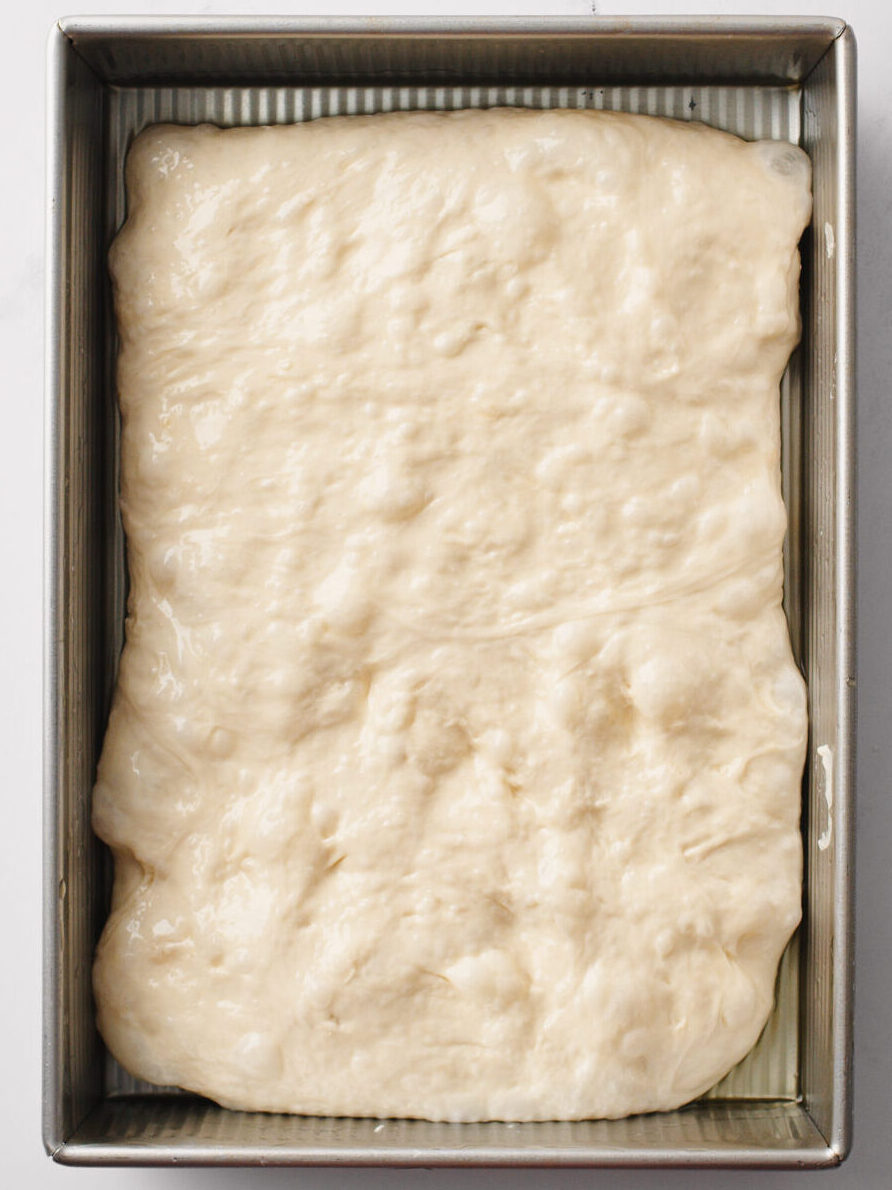
- Pour the dough into the pan. The dough may seem to "deflate" but don't fret. Fold the dough into thirds, rotate 90 degrees so that the dough is in line with the pan and flip over, revealing the smoother side on top. Gently spread the dough into the corners with your fingertips but don't force it.
Second rise
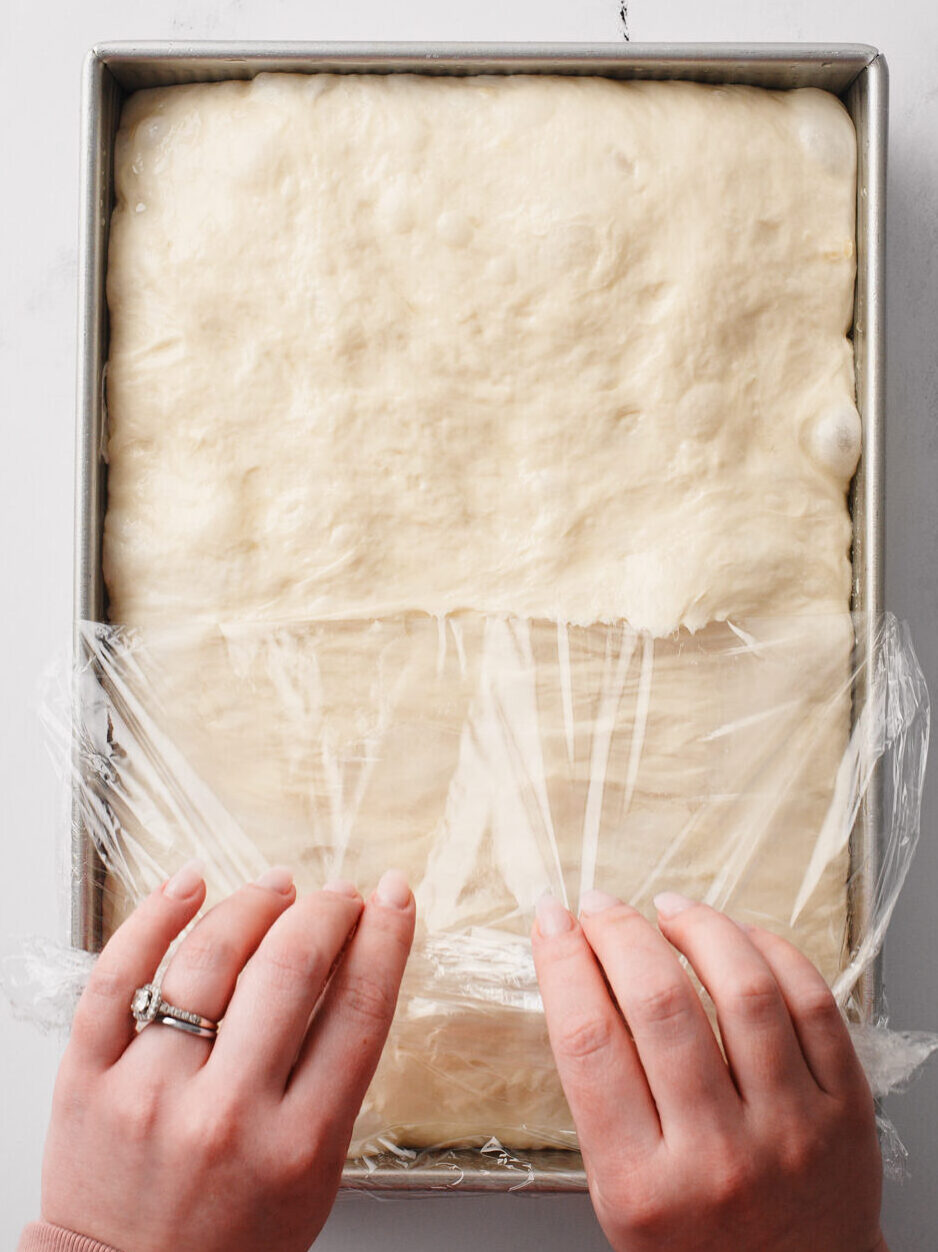
- Cover with plastic wrap and place in a warm spot at room temperature for at least 1 hour. The dough will continue to stretch and rise into the corners in this final proof. Please note, if you followed the refrigeration sample schedule, you need to let the dough come to room temperature and this may take two hours but up to 4 hours until the dough no longer feels cold and springs back when you press on it.
Preheat the oven
- Preheat the oven to 450°F / 232°C. Shred the cheeses and set aside. In a small bowl, combine the garlic herb sauce ingredients together and set aside.
- When the oven is done pre-heating, remove the plastic wrap and lightly drizzle the top of the dough with olive oil.
Dimple the dough
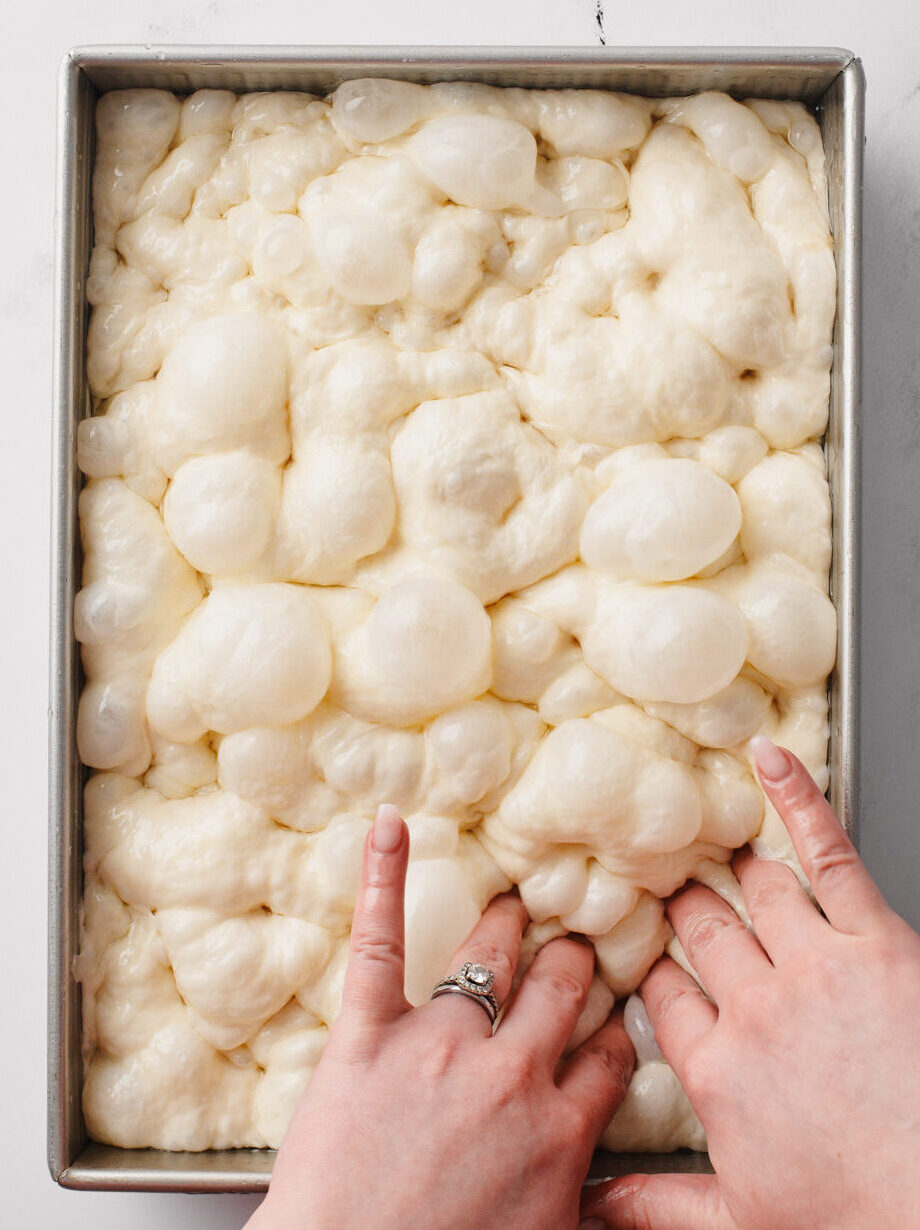
- Coat your fingertips with oil. This helps prevent sticking as you make your dimples. To do that, use your fingertips to press into the dough, creating soft indentations and bubbles on the entire surface. The dough should slowly spring back. We are looking for jiggly dough.
Bake
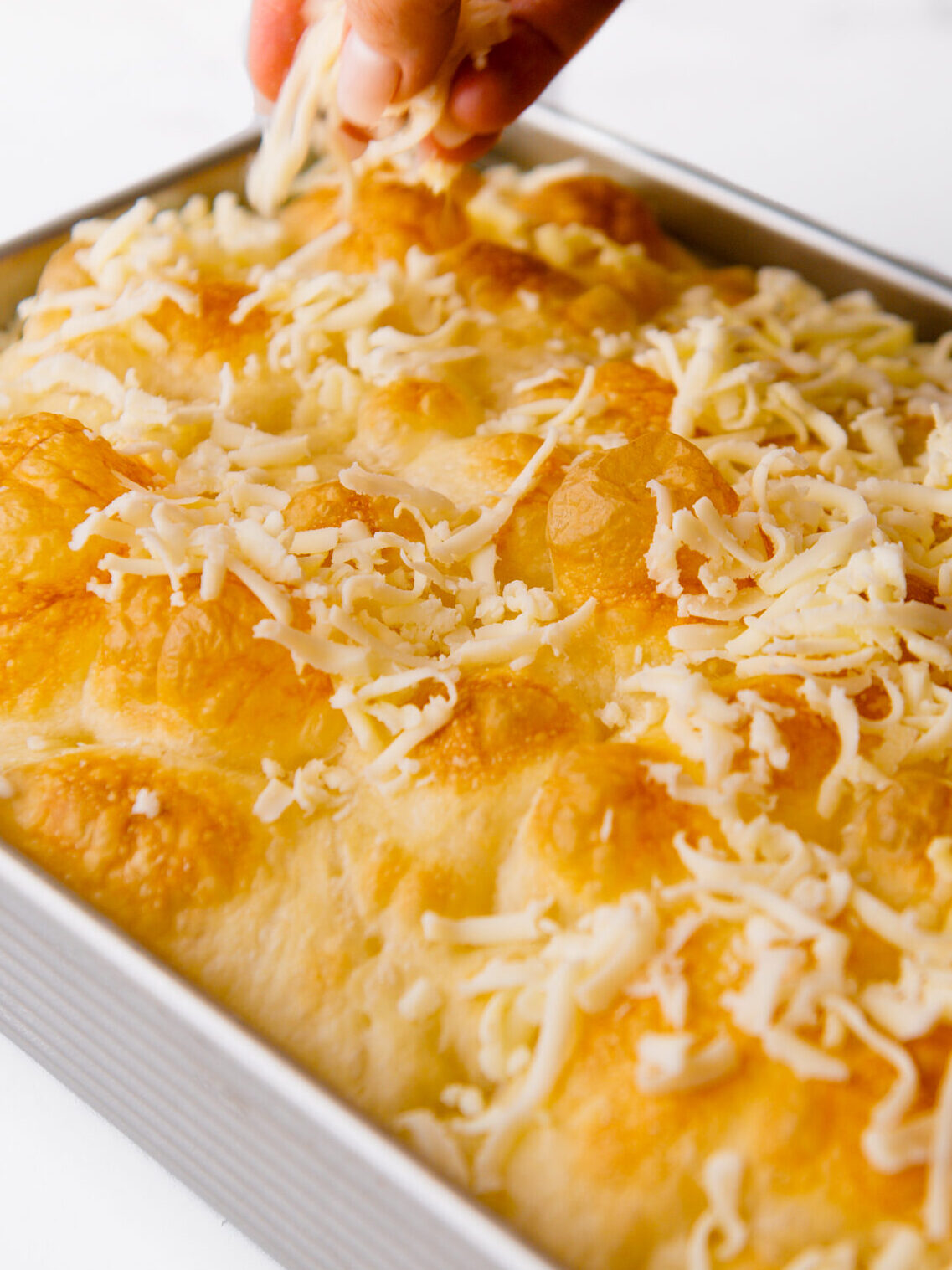
- Bake for 15 minutes until slightly golden, then remove from the oven. Sprinkle the entire surface with mozzarella and get some around the edges too.1 cup mozzarella
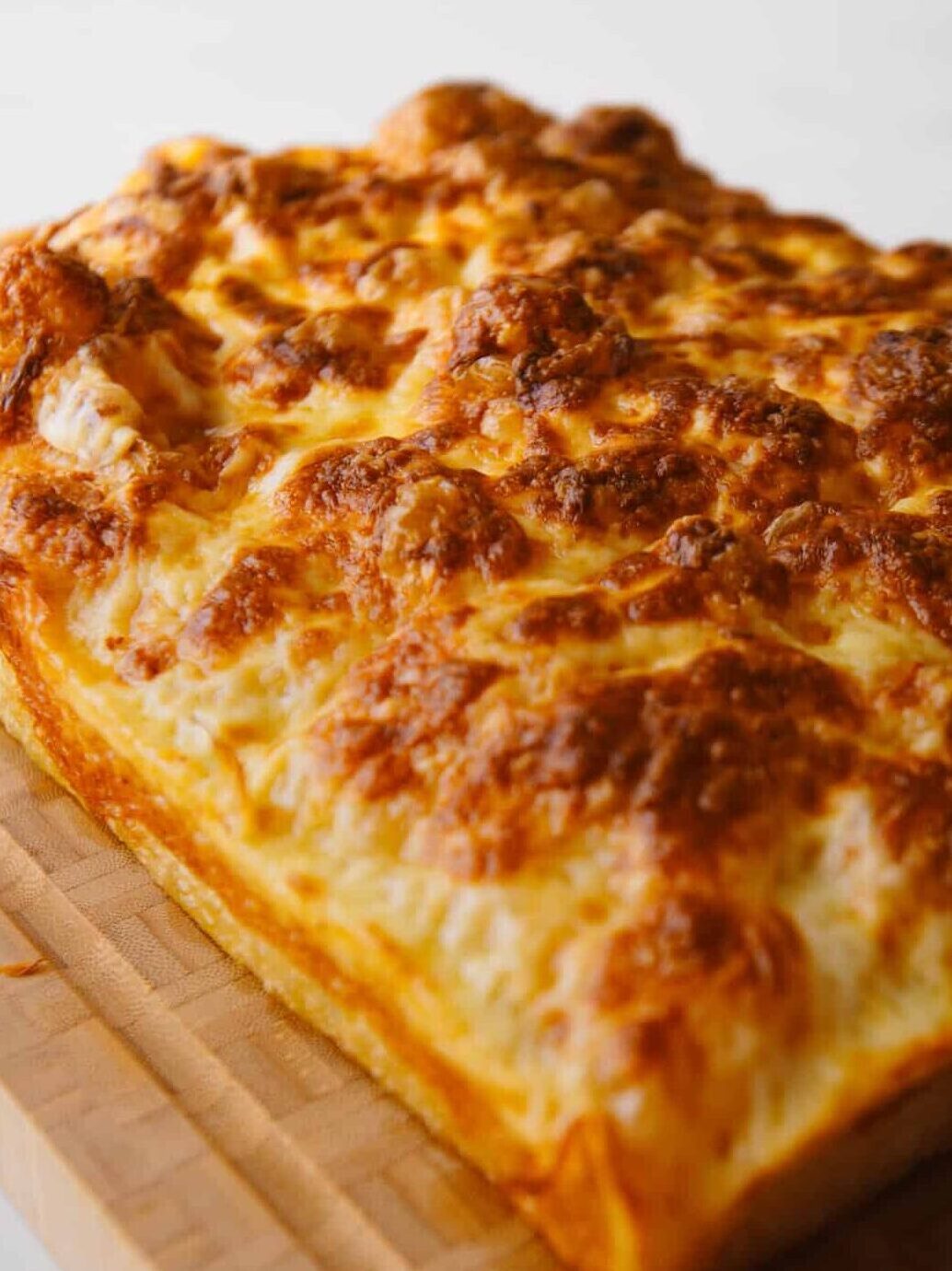
- Place back into the oven for an additional 10-12 minutes until cheese is melted, crispy and golden brown. Depending on the strength of your oven, baking time may vary by a few minutes. Leave the focaccia in the pan for at least 10-15 minutes before transferring to a wire rack to cool.
Make the garlic herb sauce
- To a small bowl, add melted butter, olive oil, minced garlic and mince parsley. Whisk to combine. Brush the garlic herb sauce over the entire top of the focaccia while still warm.2 Tablespoons unsalted butter, 2 Tablespoons olive oil, 2 Tablespoons fresh parsley, 3 garlic cloves
Notes
- Instant yeast can mixed directly with dry ingredients and active dry yeast must be dissolved in warm liquid first to be "activated" before use. First, heat up the water until its lukewarm. Stir in the active yeast and a pinch of sugar. Let it sit for 5-10 minutes until its foamy or bubbly.
- Store leftovers at room temperature, wrapped completely in plastic wrap and a tea towel, up to two days. It makes amazing sandwiches the next day. Always toast leftover focaccia in the oven to revive the texture. If your focaccia has toppings like cheeses and meats, please consume same day. It should never be stored in the refrigerator as the environment is very drying.
- Overnight schedule sample: Once you've completed the stretch and folds, oil the bowl, place in the fridge, cover with plastic wrap and forget about it, for as little as 2 hours to as long as overnight. After the first rise, transfer to a generously oiled non-stick baking tray and follow the rest of the recipe directions. Let it rise at room temperature for anywhere between 2 hours but up to 4 hours until the dough no longer feels cold and springs back when you press on it.
Nutrition
Calories: 246kcalCarbohydrates: 35gProtein: 8gFat: 8gSaturated Fat: 3gPolyunsaturated Fat: 1gMonounsaturated Fat: 4gTrans Fat: 0.1gCholesterol: 12mgSodium: 642mgPotassium: 60mgFiber: 1gSugar: 1gVitamin A: 179IUVitamin C: 1mgCalcium: 57mgIron: 1mg
The provided nutritional value above is an estimate per serving. 100% accuracy is not guarenteed. Please see Nutrition Information Disclaimer in our Privacy Policy.
Nutrition Information Disclaimer Have you tried this recipe?Please leave a comment/review below!

This is the only recipe I use. The best foccacia ever.
I now use this as a base for other flavors and its perfect every time.
Thank you so much!
The best focaccia bread!! I always get so many compliments on it. The best one has been someone offering to buy me more pans to be able to make more at a time
Very easy to follow and always turns out great!
That’s so amazing! Thank you for such a lovely review! 🙂 We’re so happy you and your family enjoy our focaccia recipe. 🙂
I made this recipe for Christmas. I started it at my house, 1st rise in fridge overnight then drove an hour to my sister’s house keeping it chilled for travel. It was so so so yummy and fun to make, it almost stole the show from the main course of scallops. Making a half recipe now. Thank you
Yay! We love to hear reviews like this. So happy you enjoyed our recipe. 🙂
Can you please provide the exact yeast that you use! Thanks!
Hi Brandi! For instant yeast, I use a brand called “Saf Instant” and for active dry yeast, I use “Red Star Yeast”.
Can you please tell me why my bread is not bubbling like yours? I’ve made it several times and I think only one time ever had the big bubbles. Other than that. It’s always been pretty flat.
Hi Brandi, thank you for your question and patience with my reply. I have not tested this pan size but I recommend halving the recipe if making it in one loaf pan. Keep the temperature at 350°F but reduce the baking time to about 45 minutes or the center of the bread reads 190-195°F. If the tops brown too quickly, place a tent with foil but not to reduce baking time. I hope this helps.
thanks for sharing this recipe! i have one question though. i’m a beginner when it comes to baking bread. What I’ve learned so far is that exact amounts of ingredients matter quite a bit. In your recipe you mention ‘tablespoons, teaspoons and cups’. Would you also be able to share these ingredients measured in grams?
Thank you, Amasja! The recipe card has a US Customary and Metric convertion button in the ingredients section for you to toggle back between cups and grams. I hope this helps! My focaccia is the perfect place to start for first time bread makers. This recipe is very forgiving! Happy baking. 🙂
Hi, I can’t wait to make this, I just wanted to be sure, do you do both stretch and folds and coil folds or just one or the other! Thankyou!
Hi Morgan! You are correct. First start with the stretch and fold method, then the rest of the folds are the coil method. I have tried this recipe using just one or the other and it turns out perfect both ways! This recipe is very forgiving. I hope this helps. 🙂 Happy baking!
The only focaccia recipe you will ever need. Throw every other recipe away!
Thank you for the lovely review, Caitlin!
Super easy to make and absolutely delicious! My family loves it!
Thank you, Esti. We’re so happy you enjoyed our recipe!
This recipe is simple to follow and is so delicious!! My kids favorite and our go to! Thank you!
Thank you, Raluca. We’re happy you enjoyed our recipe!
This recipe is dead on. The first time I made it, it as perfect. Thank you for sharing.
Your instructions were so helpful. Delicious!!
Hi Jacquie, thanks so much for the lovely review! We’re so happy you love our focaccia as much as we do! 🙂
Hi, I’ve made your focaccia bread once and it was beautiful! I wasn’t sure on which setting to put my oven on or which rack to use (middle, upper or lower). I have conventional bake and fanbake and wondered which I should use and whether I lower the temperature for fanbake? I’m asking since I’m making this again which means it will be a regular here!
Thanks 🙂
Hi Emilie, thank you for the lovely review! We’re happy to hear about your success with our focaccia! From our experience, conventional bake tends to cook much faster. I would try to bake the focaccia 25 degrees F lower than the recipe calls for. Check on the bread towards to the end of the bake time as it may be done a little sooner. We always suggest middle rack for our breads. I hope this helps. 🙂
I made this yesterday and it was excellent! The best focaccia recipe I’ve come across so far. I started it in the morning and we had it with dinner.
Hi Kathy, thank you so much! That’s what we love about our focaccia recipe. 🙂
Fluffy, garlicky, cheesy goodness thank you Patricia for another amazing bread recipe . It’s a great side to a main dish
Thank you, Monica! 🙂