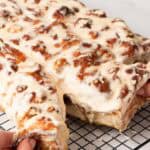
Overnight Cinnamon Roll Focaccia
Imagine the center of a cinnamon roll but in every single bite. That's what this Cinnamon Roll Focaccia tastes like! It is swirled with cinnamon sugar and finished off with a classic cream cheese frosting.
Ingredients
- 550 g bread flour
- 100 g granulated white sugar
- 500 ml warm water
- 1/2 teaspoon sea salt
- 2 teaspoons instant dry yeast 7 grams see note for active dry yeast
- 1 Tablespoon olive oil
- 3 Tablespoons melted butter, for the pan
For the cinnamon sugar filling:
- 1 Tablespoon ground cinnamon
- 1 Tablespoon granulated white sugar
For the cinnamon sugar butter glaze:
- 5 Tablespoons melted butter
- 2 teaspoons ground cinnamon
- 2 teaspoons granulated white sugar
For the cream cheese frosting:
- 8 ounces cream cheese
- 3 Tablespoons heavy whipping cream
- 2 Tablespoons softened butter
- 1/2 cup powdered sugar, adjust per sweetness preference
- 1/2 teaspoon vanilla extract
Click between "US Customary" or "Metric" button above to switch between conversions. For precise results, it's recommended to weigh your dry ingredients using a digital scale in grams as measuring in cups can have uncertainties.
Instructions
Before you start
- Don't forget to take out the cream cheese and butter. Both need to be softened at room temperature to avoid clumps when making the cream cheese frosting.
Make the dough
- To a large mixing bowl, add water, sugar, salt, yeast and oil. Whisk together, then add the flour to the yeast mixture. Use a Danish dough hook or the neck of a wooden spoon to mix for at least 1 minute until the dough is wet and sticky. Then, cover with a tea towel and allow the dough to rest for 10 minutes.Note: Instant yeast can mixed directly with dry ingredients and active dry yeast must be dissolved in warm liquid first to be "activated" before use. Measure out water from the recipe, stir in the active yeast with a pinch of sugar. Let it sit for 5-10 minutes until its foamy or bubbly.500 ml warm water, 100 g granulated white sugar, 1/2 teaspoon sea salt, 2 teaspoons instant dry yeast, 1 Tablespoon olive oil, 550 g bread flour
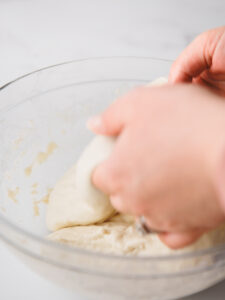
- Once the dough has rested for 10 minutes, it's time for the stretch and folds. For this recipe, I have recently adapted these two types of stretches below. See blog post above for step by step photos of these two stretches.
- STRETCH AND FOLD METHOD: This is the first type of stretch. First, wet your hands before proceeding as it will make it easier to handle the dough. Work your way around the dough like you are looking at clock.
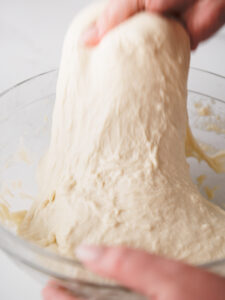
- Perform a fold at 12, 3, 6 and 9 o’clock by pulling the dough up and over to the other side of the bowl. Cover with a tea towel for 10 minutes.
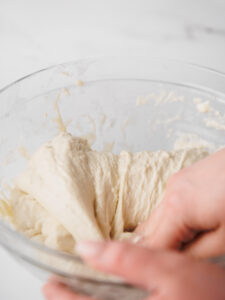
- COIL METHOD: This is the second type of stretch. Wet your hands again. Gently loosen the edges of the dough by pulling it away from the sides of the bowl. Place your fingertips under the dough, so that you can pick it up in the middle.
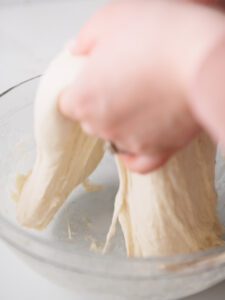
- Allow the dough to unstick from the bowl and fold using its own weight, while you support the middle. Turn the bowl 90° and repeat to perform another coil fold. Do this method 3 more times, 10 minutes apart. With each set of folds, the dough gluten structure gets stronger, making it easier to lift and fold.
First rise
- Coat the entire focaccia and bowl with a drizzle of oil, about 2 Tablespoons. Cover the top of the dough and bowl with plastic wrap and a tea towel. Let it rise in a warm spot at room temperature for at least 1 to 1½ hours or in the refrigerator overnight.
Prep the dough
- Remove the plastic wrap. Move the bowl back and forth, opening up the bubbles and allowing the dough to breathe. Coat the bottom of a 9"x13" inch aluminum, non-stick baking pan with melted butter, about 3 Tablespoons. Pour the dough into the prepared pan. The dough may seem to "deflate" but that's expected.3 Tablespoons melted butter, for the pan
- Mix cinnamon and sugar together and sprinkle evenly over the dough. Fold the dough into thirds, to seal the filling inside, rotate 90 degrees so that the dough is in line with the pan and flip over, revealing the smoother side on top and seal side down.1 Tablespoon ground cinnamon, 1 Tablespoon granulated white sugar
Second rise
- For those that followed the room temperature rise, cover with plastic wrap and place in a warm spot at room temperature for at least 1 hour. The dough will continue to stretch and rise into the corners in this final proof. If you followed the overnight refrigerator rise, you need to let the dough come to room temperature and this may take 2 hours but up to 4 hours until the dough no longer feels cold and springs back when you press on it.
Preheat the oven
- Preheat the oven to 450°F / 232°C.
Make the cream cheese frosting
- To a medium mixing bowl, add softened cream cheese and butter. Use a hand mixer to mix on high for 1-2 minutes. Then, add heavy cream, vanilla extract and powdered sugar. Mix until smooth and fluffy.8 ounces cream cheese, 3 Tablespoons heavy whipping cream, 2 Tablespoons softened butter, 1/2 cup powdered sugar, adjust per sweetness preference, 1/2 teaspoon vanilla extract
Make the cinnamon sugar butter glaze
- To a small saucepan, add butter, cinnamon and sugar. Heat over low-medium heat until melted. Set aside to cool down.5 Tablespoons melted butter, 2 teaspoons granulated white sugar, 2 teaspoons ground cinnamon
Slice the dough
- Once the dough completed the second rise, use a bench scraper or sharp knife to cut the dough into 12 equal sections or as many sections as you'd like! But divide it directly in the pan.
- Coat your fingertips with oil. Use your fingertips to press into the dough, creating soft indentations and emerging bubbles on the entire surface.
- Pour the melted cinnamon sugar butter over the entire surface evenly, making sure it pools into the dimples and along the cut edges.
Bake
- Place the focaccia in the center baking rack. Bake between 20-22 minutes until puffy and golden brown. Be careful not to burn the tops from the butter sugar glaze. Leave the focaccia in the pan for at least 10-15 minutes before transferring to a wire rack. While the focaccia is still warm, spread the cream cheese frosting on top. Optionally, top with a sprinkle of light brown sugar, dark brown sugar, or cinnamon sugar topping.
Notes
- Focaccia is best enjoyed same day. Place cooled focaccia in an airtight container wrapped in plastic and store at room temperature for up to 2 days. I don't recommend storing focaccia in the fridge as it tends to dry out the bread.
- Overnight schedule sample: Once you've completed the stretch and folds, oil the bowl, cover with plastic wrap, and refrigerate for as little as 2 hours to as long as overnight. After the first rise, transfer to a melted buttered non-stick baking tray and follow the rest of the recipe directions. Let it rise at room temperature for anywhere between 2 hours but up to 4 hours until the dough no longer feels cold and springs back when you press on it.
- Instant yeast can mixed directly with dry ingredients and active dry yeast must be dissolved in warm liquid first to be "activated" before use. Measure out water from the recipe, stir in the active yeast with a pinch of sugar. Let it sit for 5-10 minutes until its foamy or bubbly.
Nutrition
Calories: 296kcalCarbohydrates: 45gProtein: 7gFat: 10gSaturated Fat: 5gPolyunsaturated Fat: 1gMonounsaturated Fat: 3gCholesterol: 23mgSodium: 158mgPotassium: 79mgFiber: 2gSugar: 11gVitamin A: 313IUVitamin C: 0.1mgCalcium: 38mgIron: 1mg
The provided nutritional value above is an estimate per serving. 100% accuracy is not guarenteed. Please see Nutrition Information Disclaimer in our Privacy Policy.
Nutrition Information Disclaimer Have you tried this recipe?Please leave a comment/review below!