
No-Knead Focaccia
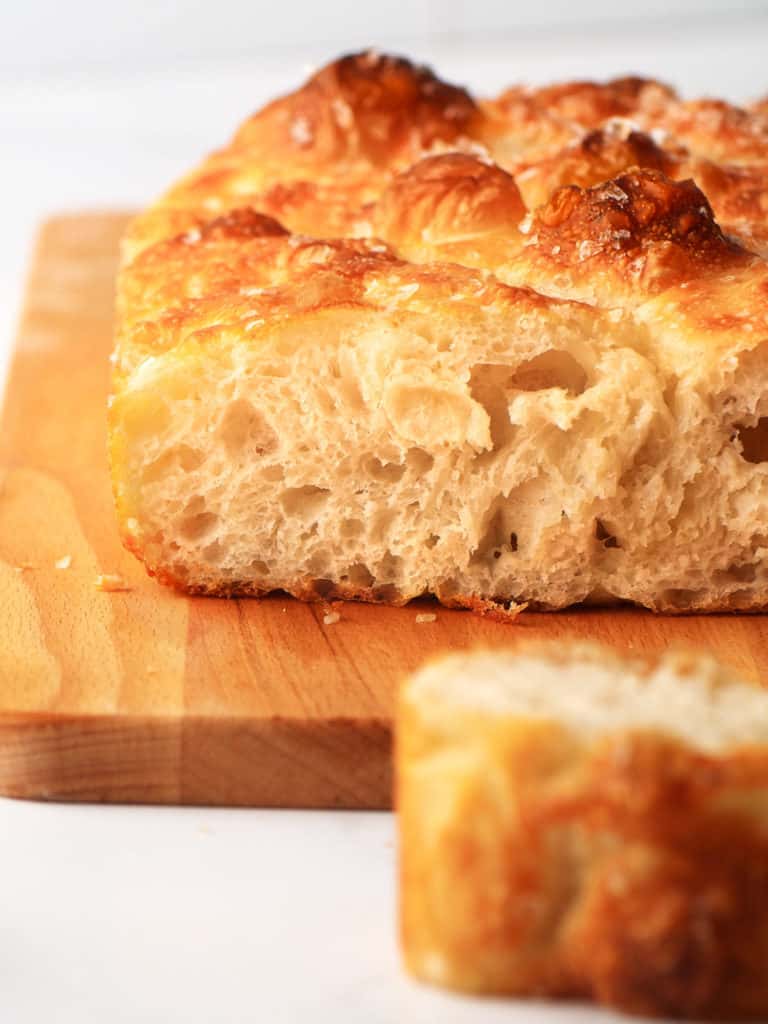
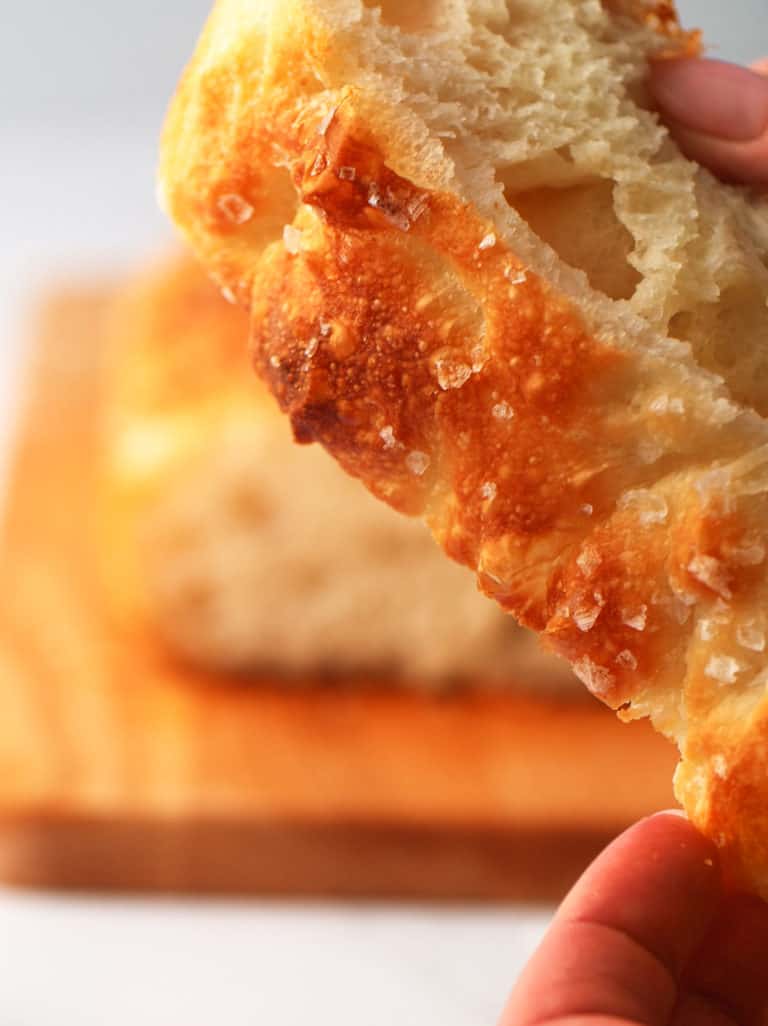
This is my viral, no-knead focaccia recipe. Focaccia is a super soft and fluffy bread, perfect for sandwiches, scooping up sauces or as a side dish. I can almost guarantee it will quickly become your favorite focaccia recipe ever. It's practically fool-proof! It requires minimal hands-on effort yet yields golden perfection. The whole process is nothing short of miraculous.
Ingredients
- 500 ml warm water
- 1 Tablespoon sugar
- 1 Tablespoon sea salt NOT table salt
- 2 teaspoons instant dry yeast see note below if using active dry yeast
- 1 Tablespoon olive oil
- 550 grams bread flour
Click between "US Customary" or "Metric" button above to switch between conversions. For precise results, it's recommended to weigh your dry ingredients using a digital scale in grams as measuring in cups can have uncertainties.
Instructions
Make the dough
- To a large mixing bowl, add water, sugar, salt, instant yeast and oil. Whisk together, then add the flour. Use a Danish dough hook or the neck of a wooden spoon to mix for at least 1 minute until a wet, sticky, shaggy dough is formed. Cover with a tea towel and allow the dough to rest for 10 minutes.Note: Instant yeast can mixed directly with dry ingredients and active dry yeast must be dissolved in warm liquid first to be "activated" before use. Measure out water from the recipe, stir in the active yeast with a pinch of sugar. Let it sit for 5-10 minutes until its foamy or bubbly. Then, add to the rest of the ingredients, mix and proceed with the recipe.Note: This recipe uses sea salt, which has larger, coarser grains compared to fine table salt. This affects the quantity of salt and the saltiness in the bread. If you don't have sea salt, reduce the salt measurement to 2 teaspoons.500 ml warm water, 1 Tablespoon sea salt, 1 Tablespoon sugar, 2 teaspoons instant dry yeast, 1 Tablespoon olive oil, 550 grams bread flour
Stretches
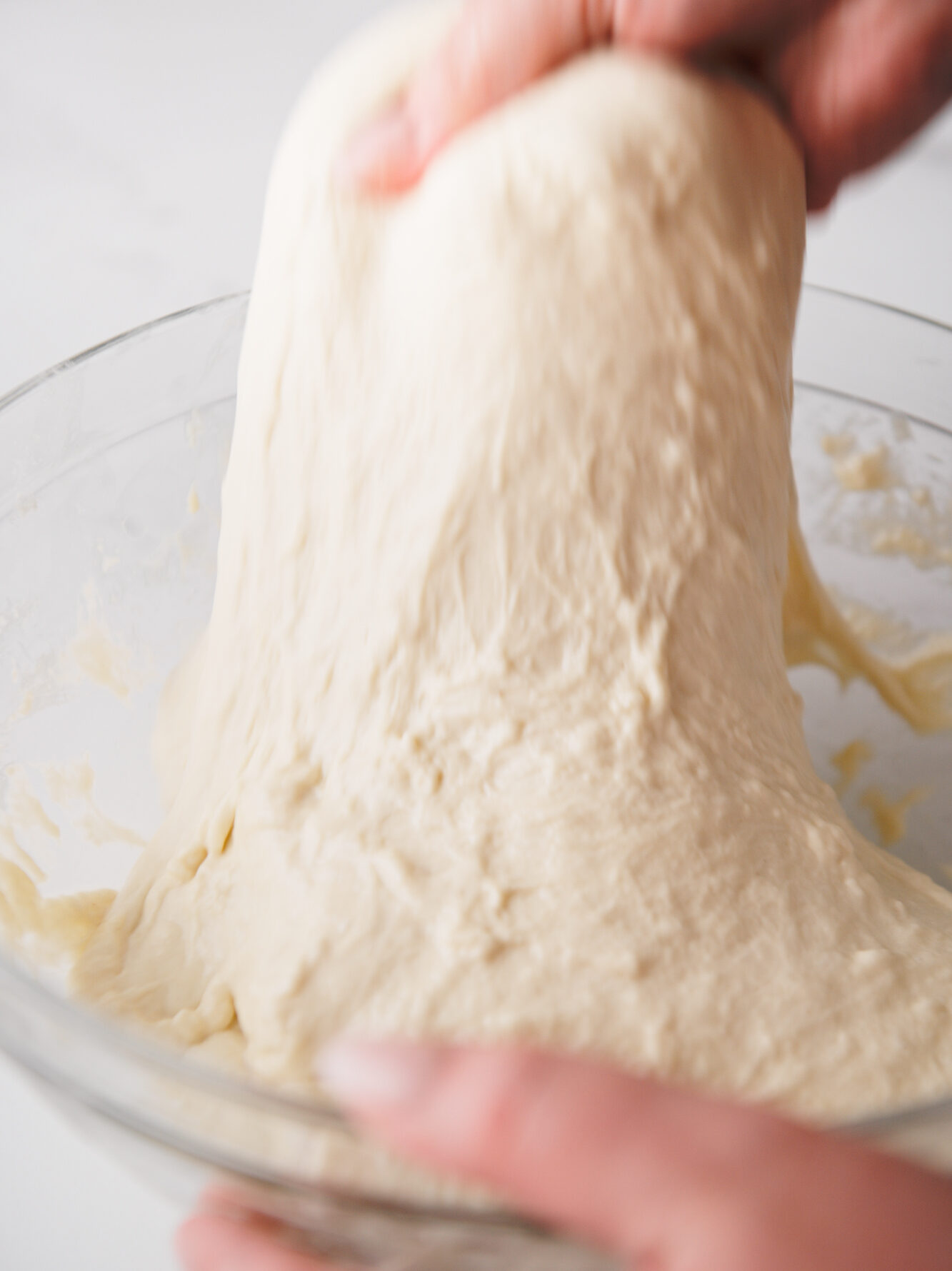
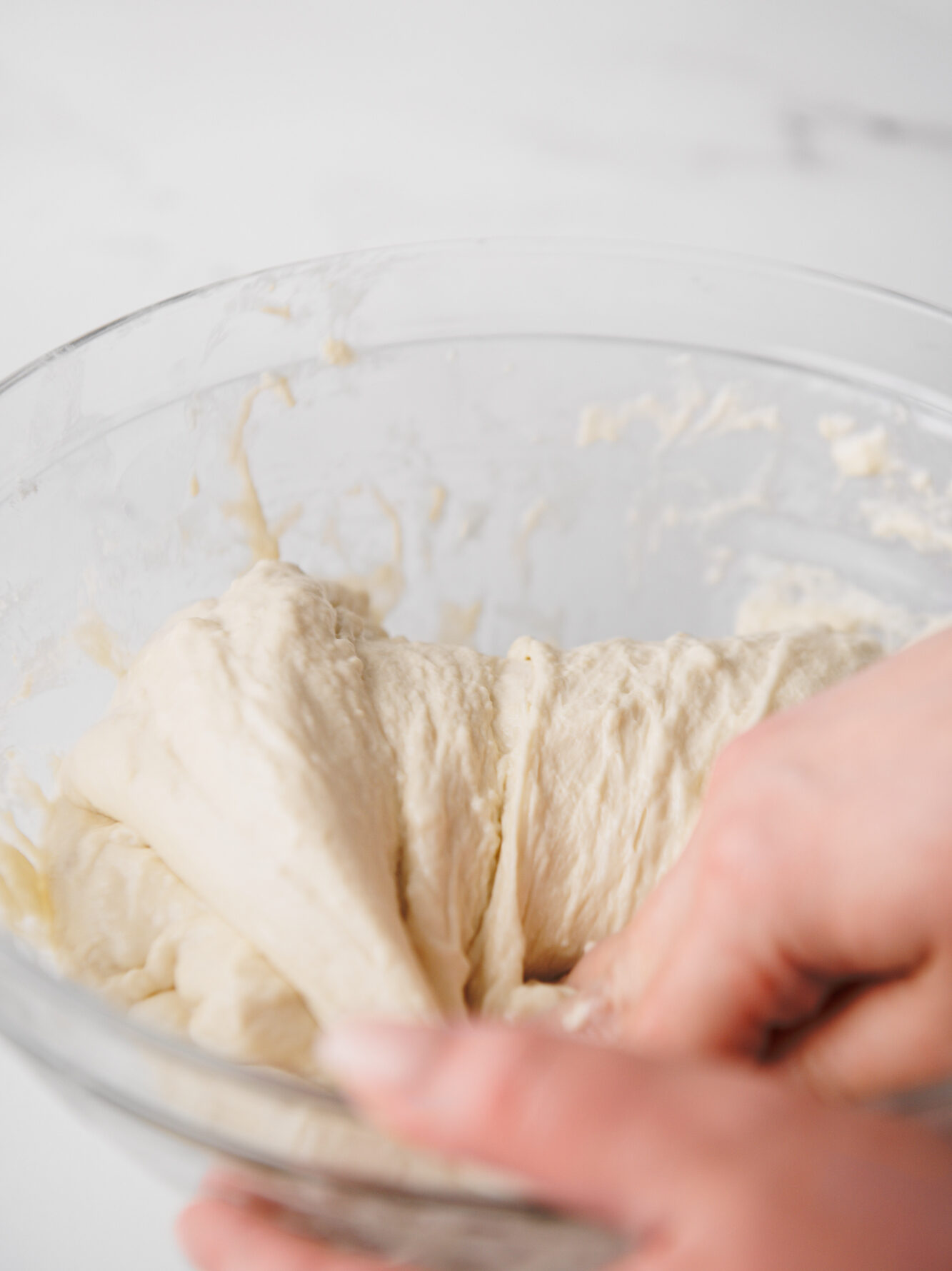
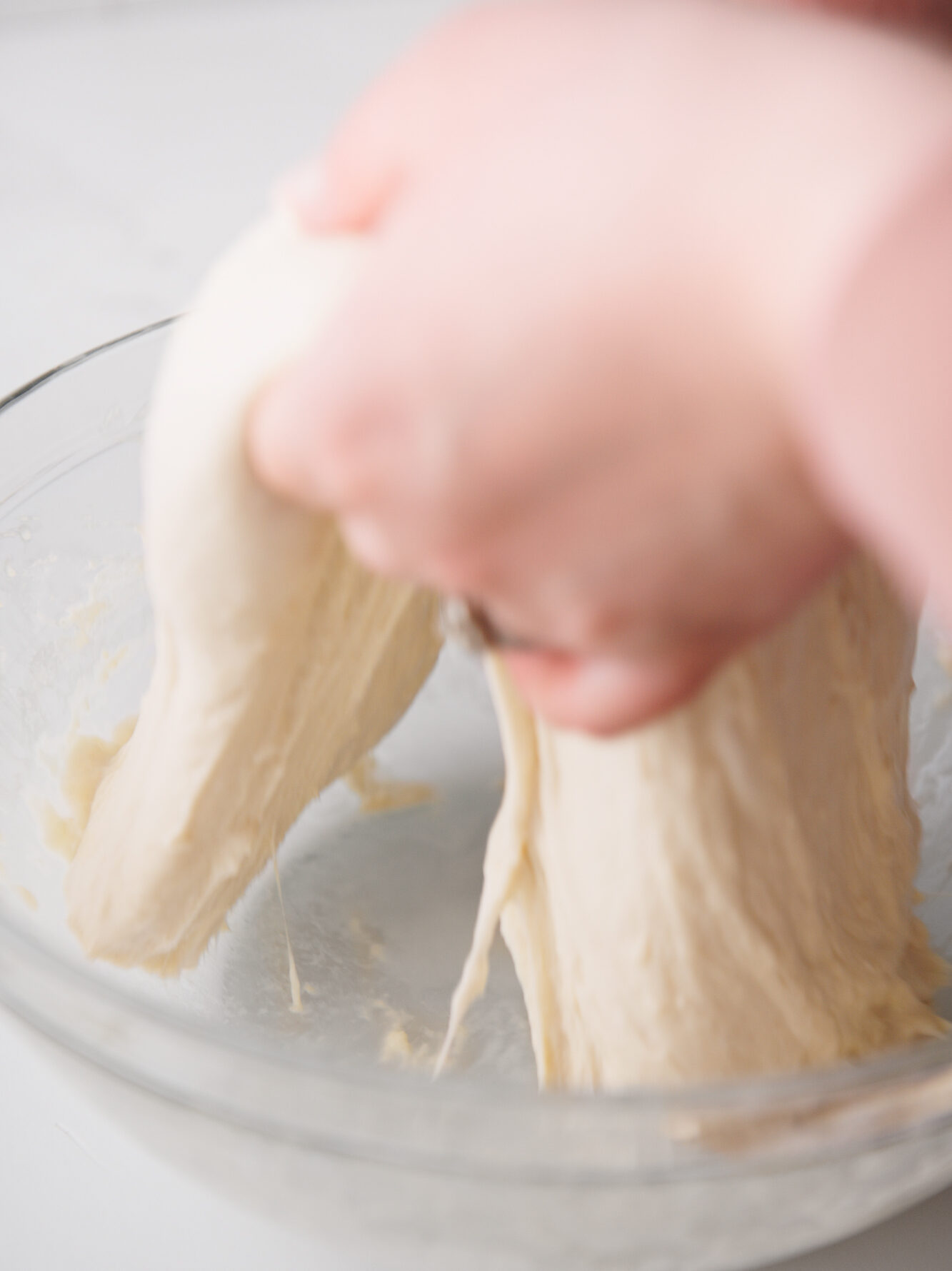
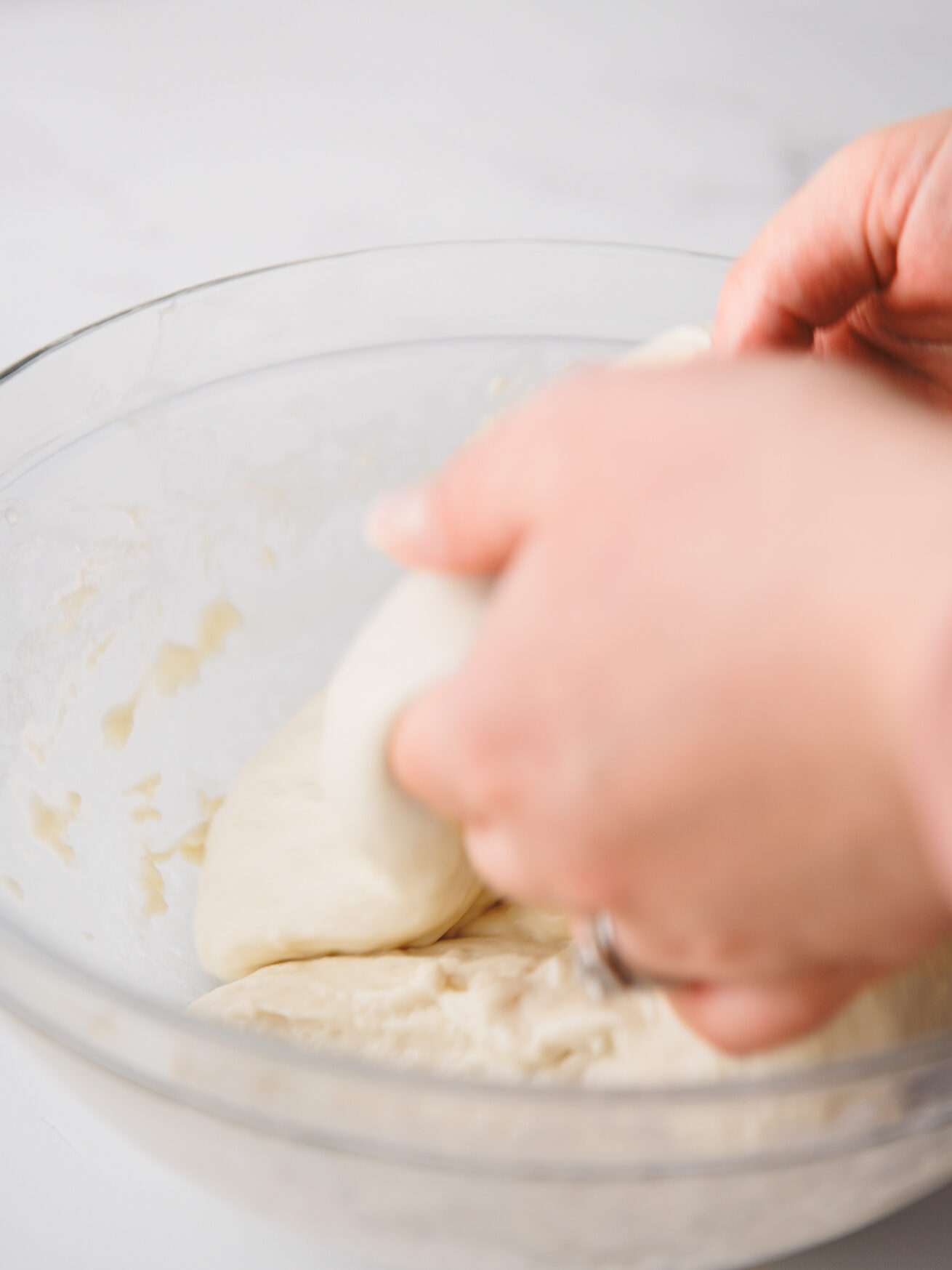
- Once the dough has rested for 10 minutes, it's time for the stretch and folds. For this recipe, I have recently adapted two types of stretches. STRETCH AND FOLD METHOD: This is the first type of stretch. First, wet your hands before proceeding as it will make it easier to handle the dough. Work your way around the dough like you are looking at clock. Perform a fold at 12, 3, 6 and 9 o’clock by pulling the dough up and over to the other side of the bowl. Cover with a tea towel for 10 minutes.COIL METHOD: This is the second type of stretch. Wet your hands again. Gently loosen the edges of the dough by pulling it away from the sides of the bowl. Place your fingertips under the dough, so that you can pick it up in the middle. Allow the dough to unstick from the bowl and fold using its own weight, while you support the middle. Turn the bowl 90° and repeat to perform another coil fold. Do the coil method 3 more times, 10 minutes apart.
First rise
- Coat the entire focaccia and bowl with oil, about 3 Tablespoons. Cover the bowl with plastic wrap and a tea towel. Let it rise in a warm spot at room temperature for at least 1 to 1 ½ hours or in the refrigerator for anywhere between 2 hours or up to overnight. Read more about my alternative rising schedules in this blog post.Note: This first rise is called bulk fermentation. It allows the yeast to ferment the dough, developing flavor and helping the gluten structure form.
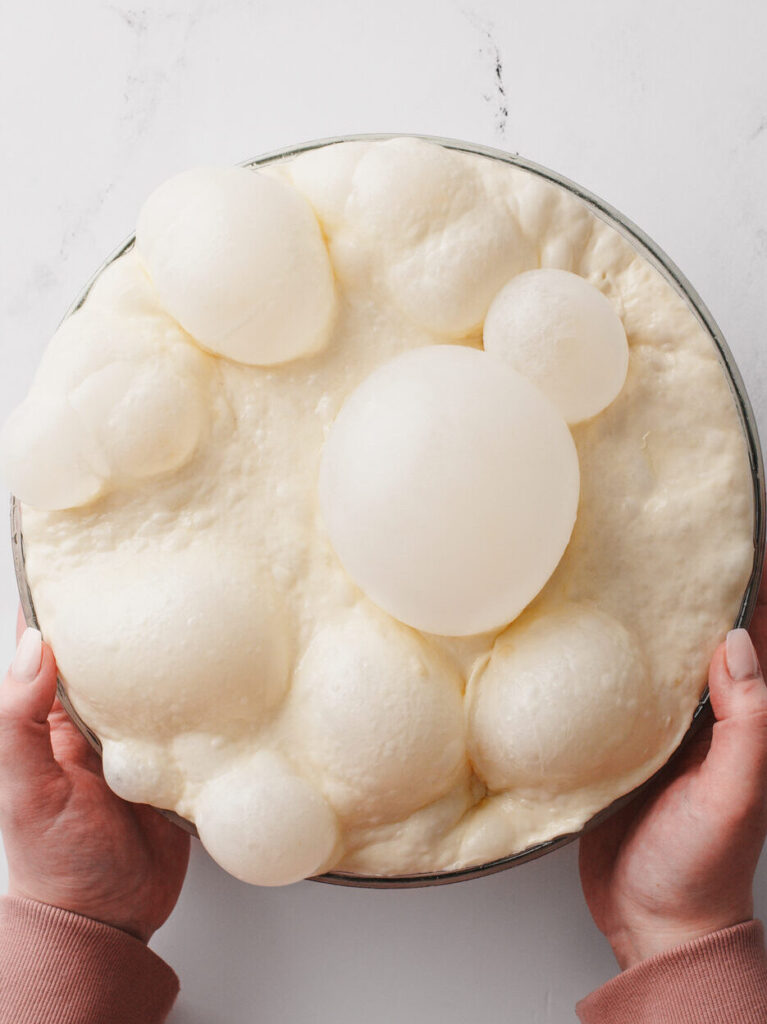
- Remove the plastic wrap. Move the bowl back and forth, opening up the bubbles and allowing the dough to breathe. Coat a generous layer of olive oil on the bottom of the pan (either a a 9"x13" inch aluminum, non-stick baking pan).
- Pour the dough into the pan. The dough may seem to "deflate" but don't fret. Fold the dough into thirds, rotate 90 degrees so that the dough is in line with the pan and flip over, revealing the smoother side on top. Gently spread the dough into the corners with your fingertips but don't force it. It will spread more in the second rise.
Second rise
- Cover with plastic wrap and place in a warm spot at room temperature for at least 1 hour. The dough will continue to stretch and rise into the corners in this final proof. Note: If you followed the refrigeration sample schedule, you need to let the dough come to room temperature and this may take two hours but up to four hours until the dough no longer feels cold and springs back when you press on it.
Preheat the oven
- Preheat the oven to 450°F / 232°C.
- When the oven is done pre-heating, remove the plastic wrap and lightly drizzle the top of the dough with olive oil.
Bake
- Transfer the dough to your prepared pan. Coat your fingertips with some of the oil. This helps prevent sticking as you make your dimples. To do that, use your fingertips to press into the dough, creating soft indentations and bubbles on the entire surface. The dough should slowly spring back. We are looking for jiggly dough.
- Season with a generous pinch of sea salt and place into the oven for 22-25 minutes until golden brown and crispy. Depending on the strength of your oven, baking time may vary by a few minutes. Leave the focaccia in the pan for 10-15 minutes before transferring to a wire rack to cool before slicing.
Notes
- Instant yeast can mixed directly with dry ingredients and active dry yeast must be dissolved in warm liquid first to be "activated" before use. First, heat up the water until its lukewarm, about 110°F. Stir in the active yeast and a pinch of sugar. Let it sit for 5-10 minutes until its foamy or bubbly.
- Store leftovers at room temperature, wrapped completely in plastic wrap and a tea towel, up to two days. It makes amazing sandwiches the next day. Always toast leftover focaccia in the oven to revive the texture. If your focaccia has toppings like cheeses and meats, please consume same day. It should never be stored in the refrigerator as the environment is very drying.
- Overnight schedule sample (if you'd like to try an overnight rise): Once you've completed the stretch and folds, oil the bowl, place in the fridge, cover with plastic wrap and refrigerate little as 2 hours to as long as overnight. After the first rise, transfer to a generously oiled non-stick baking tray and follow the rest of the recipe directions. Let it rise at room temperature for anywhere between 2 hours but up to 4 hours until the dough no longer feels cold and springs back when you press on it.
Nutrition
Calories: 180kcalCarbohydrates: 34gProtein: 5gFat: 2gSaturated Fat: 0.3gPolyunsaturated Fat: 0.5gMonounsaturated Fat: 1gSodium: 582mgPotassium: 46mgFiber: 1gSugar: 1gVitamin A: 1IUCalcium: 7mgIron: 0.4mg
The provided nutritional value above is an estimate per serving. 100% accuracy is not guarenteed. Please see Nutrition Information Disclaimer in our Privacy Policy.
Nutrition Information Disclaimer Have you tried this recipe?Please leave a comment/review below!


I have made this so many times! My favorite has been to use a Mediterranean herb infused olive oil in place of plain olive oil. No matter what you use, it’s absolutely the best focaccia recipe out there!
Thank you Kirsten! 🙂
Most amazing focaccia I’ve ever had! And so easy to make
Thank you Lore! 🙂
Super. Niciodata nu mi-a iesit asa de faina 🙂
Multumesc de explicatii si reteta.
Multumescu mult!
My favorite bread to make. So easy and tasty
Thank you!
The bread is delicious!!!! I had a hard time getting it out of the pan though, do you think it was because I didn’t out enough oil in the pan?
Hi Stacey! Was it a glass or aluminum pan? I recommend a true non-stick aluminum pan for best results. Glass is a poor conductor of heat. Next time, try a piece of parchment paper on the bottom. 🙂
First time focaccian here and WOW!! This recipe is absolutely perfect and is going in our weekly rotation! Thank you for sharing
Yay! We’re so happy you love our focaccia!
I made this to use for panninis. It was OK. I added everything bagel, rosemary, & course sea salt on top. I missed the part of the instructions that said do not store in refrigerator and wrapped in plastic & put it in there anyway. Day after I toasted in toaster oven & dipped in a robust olive oil with some dipping spices & holy cow, it was fantastic. I am making cream of celery soup for dinner tonight & plan to make some croutons with it for in the soup. I will make this again for these reasons.
BTW, it was fun to make because the dough was so jiggly.
Thank you, Gail! So happy you liked our recipe. We have to try enjoying it your way.
Can I make this with gluten free bread flour?
Thank you for your question. This recipe has not been tested with gluten-free flour. If you try it, please let us know the final results.
Hello! I’ve already made the dough and realized my aluminum pans dont have high edges. Is this is problem? Should I switch to a glass cake pan?
Hi Andria, depending on how low the sides are, it shouldn’t be an issue as the bread structure is pretty sturdy. Please let me know how the results turned out!
Absolute FAVORITE bread recipe!! Everyone loves it and I always get asked to make it for family gatherings! If I were to explore the world of add ins (cheese, rosemary, etc) would this recipe work? What step would be good to add them in??
Thank you for such a lovely review! 🙂 Focaccia is very versatile with add-ins! My advice is to avoid mixing too many wet ingredients into the dough itself as it can weigh it down and affect the rise. Instead, try layering moist toppings like tomatoes or sautéed mushrooms on top of the dough after dimpling and just before baking. This way, you can keep the signature airy texture intact while still adding flavor. I hope this helps. Happy baking!
Worth every waiting moment!
Thank you, Lavinia!
Have you ever used sourdough discard in place of the yeast. If so how much and would you cut out the sugar when using discard
Hi Theresa, you may substitute the yeast with 100g of sourdough starter and omit the sugar. I recommend to increase the time between each stretch and fold to 30 minutes. After the stretches, proof the dough overnight in the fridge. Follow the rest of the recipe instructions. I hope this helps!
Hi. Thank you for your reply! 100g of discard or active?
Active 🙂 Anything between 100g to 110g is great. Please let me know how it turns out! 🙂
Absolutely the best focaccia recipe on the internet.
Thank you, Dennise! We’re so glad you enjoy our focaccia recipe.
We cannot go a week without making this focaccia recipe. It replaces every other recipe we’re ever had. It makes the most delicious Italian sandwiches too! 10/10
Thank you, Caitlin! We sure do love our focaccia recipe as much as you.
Amazing recipe, easy and delicious
Yay! We love to hear that. 🙂
I actually just started this recipe and mistakenly added a finer salt, is it completely ruined? Or can I salvage? I could also restart with a course salt
Hi Payton! It’s not ideal but it should be okay. It will definitely be more salty and may not produce as much bubbles. I have a conversion in the recipe card for fine salt use for next time. 🙂
I will try it immediately!!
Let us know what you think. 🙂
Could you please clarify the correct amount of sea salt. I previously printed the recipe and it said 1 tbsp sea salt. I notice that the recipe now states 2 tbsp of sea salt. Also is it fine or coarse sea salt or perhaps Maldon flaked sea salt that you use?
Thank you,
Christine
Hi Christine, thank you for your questions! Coarse sea salt is recommended. I only sprinkle Maldon flaked sea salt over the focaccia right before baking. I’m sorry, there seems to have been some glitches with recipes transferring incorrectly but that has since been fixed. Confirming the amount of sea salt to use is 1 Tablespoon – although 2 Tablespoons works just fine. I hope this helps. 🙂
My first time making focaccia and I’m so happy I found this recipe. The instructions were perfect. I did put too much salt on top of mine according to my husband because I only had the fine one not the sea salt but I like salty so it was fine for me. The next day it wasn’t as salty. It made a delicious side to pasta and using it for sandwiches. I will definitely use this recipe again.
Hi Ruth, we’re honored for such a lovely review! Thank you for taking the time to share your experience. 🙂
This was easy to follow and hard to mess up. Makes an impressive loaf with little effort. I made it with everything bagel topping because I couldn’t find the rosemary. So good! Will definitely make again and again.
Thank you for such a lovely review, Elizabeth! We’re so glad you enjoyed our focaccia! 🙂
Indeed an easy focaccia to make. This was my first one and I was so fascinated by the entire process. The result was yummy! Give it a try! You won’t regret it!
Thank you for the lovely review, Livia! We’re happy our focaccia impressed you and your taste buds. 🙂
I love this focaccia recipe! I recently decided to give it a try, having tried different ones in the past. This specific one is the queen of focaccias!!!! It turns out soft and perfectly balanced in all ways! You need to try it to know what I’m saying. Period.
Thanks so much, Sally! Truly, the sweetest compliment. 🙂
If you want a focaccia recipe to have for life, this is it. It’s absolute amazing. I’ve already made it many times, and it does not disappoint everytime. Once you try it you will be wanting to make it over and over again! I’ve got lots and lots of compliments on it:)
Thank you for the lovely review, Lavi. I’m happy to hear my focaccia has become a big hit! 🙂
Delicious! New family favorite! So glad I stumbled upon this. This recipe was so easy to follow, all of the steps are very clear. As someone who has failed at bread recipes many times, I felt confident in the recipe as I followed it and was successful! Worth trying out, even for a beginner.
Thank you so much for the lovely review, Amanda! To this I’ll say mission accomplished because our goal is to make sure everyone feels confident in the kitchen, even with our more intimidating recipes. Happy baking! 🙂
Perfect recipe! I just replaced the dry yeast with fresh yeast.
Thank you for the lovely review! We don’t have fresh yeast as readily for purchase in our area so I’m happy to hear the substitute worked our perfectly. 🙂
Literally the easiest recipe to follow and my focaccia turned out PERFECT the first time!!!
Thank you for the lovely review, Sara! Happy baking! 🙂
Do not make this recipe. You will never again be able to eat regular bread. Everything bagels will forever make you wish you were eating this focaccia. Your friends will tire of hearing how much you love focaccia. Your days will center around the timing of baking this bread. You will end up a recluse who bakes the most perfect focaccia of all time and lives happily ever after.
This is my favorite review of all time!! Thank you so much, Becky! 🙂
WHAT A HIT! I’ve used this recipe now a dozen or more times and it is always INCREDIBLE! So simple, with perfect easy to follow instructions! My one advice is to definitely stick to the high quality flour, it makes a big difference. This one is a crowd pleaser every single time, and while I’m a pretty proficient home cook, I have exactly zero experience baking bread before this recipe!
Thank you for the lovely review, Tina! We’re so happy when our focaccia gains the sweet attention it deserves. 😉
Perfect recipe. I’ve tried a lot of focaccia recipes with no success. This is the best one yet!
Thank you, Dae! We love to hear this and we’re happy for your baking success. 🙂
I cannot even tell you how good this focaccia bread is. You need to try it for yourself. I’d give it 10 stars if I could. My husband and kids ask for this every week. Another home run recipe!
Thanks so much, Karina!! We’re so glad this recipe is getting all the recognition it deserves! 🙂
I made this yesterday and it turned out amazing! I’ve recently begun experimenting with baking different breads and this one is the winner so far by a landslide. I got a nice crisp on the outside and the inside was so pillowy and soft. I sprinkled some garlic powder and Italian seasoning and diced baby tomatoes over the top. This is a perfect recipe to dress up with whatever toppings you want. I will definitely be bookmarking this recipe and making it again.
Hi Anne! We really appreciate the lovely review. 🙂 Happy baking!
This recipe changed my life ! I never understood the hype until I made your recipe! 100%
It’s an honor 🙂
Is the tablespoon of salt correct?
Yes.
This was absolutely fantastic bread! I attempted 3 times before on foccacia bread with different recipes and the bread was never jiggly, or bubbly. Thank you so much for sharing this with others this amazing recipe!
Hi Daniela! Your comment put a smile on my face. Thank you for the kind review. 🙂
I’ve made this recipe more than 10 times since I found it a few months ago, and my friends and family absolutely love it! I’ve tried many focaccia recipes and nothing compares to the pillowy texture and crispy outer shell. This is a wonderful recipe, and I encourage beginner bread makers to make this.
Make at your own risk because this is addictive!
Haha thank you, Oana! Maybe I should put a warning label on the recipe!
The OG of breads – this is the BEST bread for a sandwich hands down. Fluffy, lightly salted, and the best texture. I’ve eaten this more times than I can count, it’s that good!
⭐️⭐️⭐️⭐️⭐️
Yay!! The love for focaccia is limitless!
WHOA
I’ve been “learning to bake bread” as my new years resolution, mostly through a popular baking book. To say this recipe blew all previous tries from that book is an understatement. This is now my go-to party pleaser and daily use bread.
Can I request a Rye or Pumpernickel recipe? I have some beautiful rye flower I haven’t used yet, but am not sure I trust my book anymore!
Thank you!!!
Hi Brett, wow! We are honored to have such a high review. We’re so glad you had much success with our recipe. I will work on a rye or pumpernickel bread. Come back again soon but until then, happy baking!
To say I love making this focaccia is an understatement. I make it 2-4 times a week because my kiddos love it so much. Simply the best!
Thank you, Debbie! Happy Baking!
Patricia makes the best focaccia ever. Ever since she showed me how to make it, it’s on repeat on the weekly menu and my family can’t get enough of it. Took it to a party and it was gone in no time with people asking for more. The best part about it is how easy it is to make.
Thanks Patricia ❤️
Thank you so much, Mari! Just doing what I love most! 🙂
Hands down, the best recipe for focaccia. I can eat this every day and not get sick of it!
That’s what we love to hear 🙂
This is a great focaccia recipe and it’s easy to follow. Me and my family love it and they ask for it frequently! I’ve also made it and given it to friends as gifts, and they’ve loved it too and asked for the recipe! Thank you for posting this and explaining the steps so well.
Bread bags are the best kind of gifts! Thanks for sharing, Tabitha! 🙂
Came out perfectly! We loved it. I added some Maldon Salt and Rosemary to the top. This recipe is a keeper!!
Yay!! Another bread success 🙂
This is the first bread I’ve ever made (beside banana bread). The video and instructions were so helpful and I felt confident that I could do this without messing it up. And it worked! It was so delicious. I added a bit of rosemary to one half as an experiment and that worked great too!
This comment made me smile! You can do it and you did! 🙂
Thanks so much Andra! 🙂
My first focaccia ever and I couldn’t have done it without your recipe and guidance!! A family favorite!
Hi Omi, I’m glad my tips helped you! Happy Baking 🙂
Thank you, Lily! Happy to hear your entire family is enjoying my favorite carb recipe. 🙂
This bread is unreal! I’ve used other recipes in the past and struggled to get a fluffy, bouncing result. If you have too, this is your answer! love love love it!
Hi Jen, your review left a big smile on my face. Thanks so much!
Hi Kathy, thank you so much for sharing! I’m glad your family is enjoying my delicious focaccia recipe. It’s our favorite!
I get so excited everytime I get to eat this! So yummy!
Thanks so much, Esti! I’m glad to hear you’re enjoying my focaccia!